AI
our blog
Digital Design Companies vs. In-House Teams: Key Comparisons for CTOs
Overview
This article provides a critical comparison of digital design companies and in-house teams, focusing on their respective strengths and weaknesses to aid CTOs in their decision-making processes.
- Digital design companies bring a wealth of diverse expertise and scalability, making them particularly well-suited for complex projects.
- Conversely, in-house teams excel in brand alignment and offer cost-effectiveness for ongoing initiatives.
Ultimately, the choice between these options hinges on the specific business needs and project requirements at hand. By understanding these dynamics, CTOs can make informed decisions that align with their strategic goals.
Introduction
The landscape of digital design is evolving rapidly, presenting organizations with a pivotal choice: partner with external design companies or cultivate in-house teams. Each option brings unique strengths and challenges, shaping how businesses approach product development and user experience.
This article delves into critical comparisons between digital design companies and in-house teams, revealing insights that CTOs must consider to align their strategic objectives with the right design approach. With varying levels of expertise, cost implications, and scalability, the decision can significantly impact a company's growth trajectory.
Which path will best serve the innovative demands of the digital age?
Defining Digital Design Companies and In-House Teams
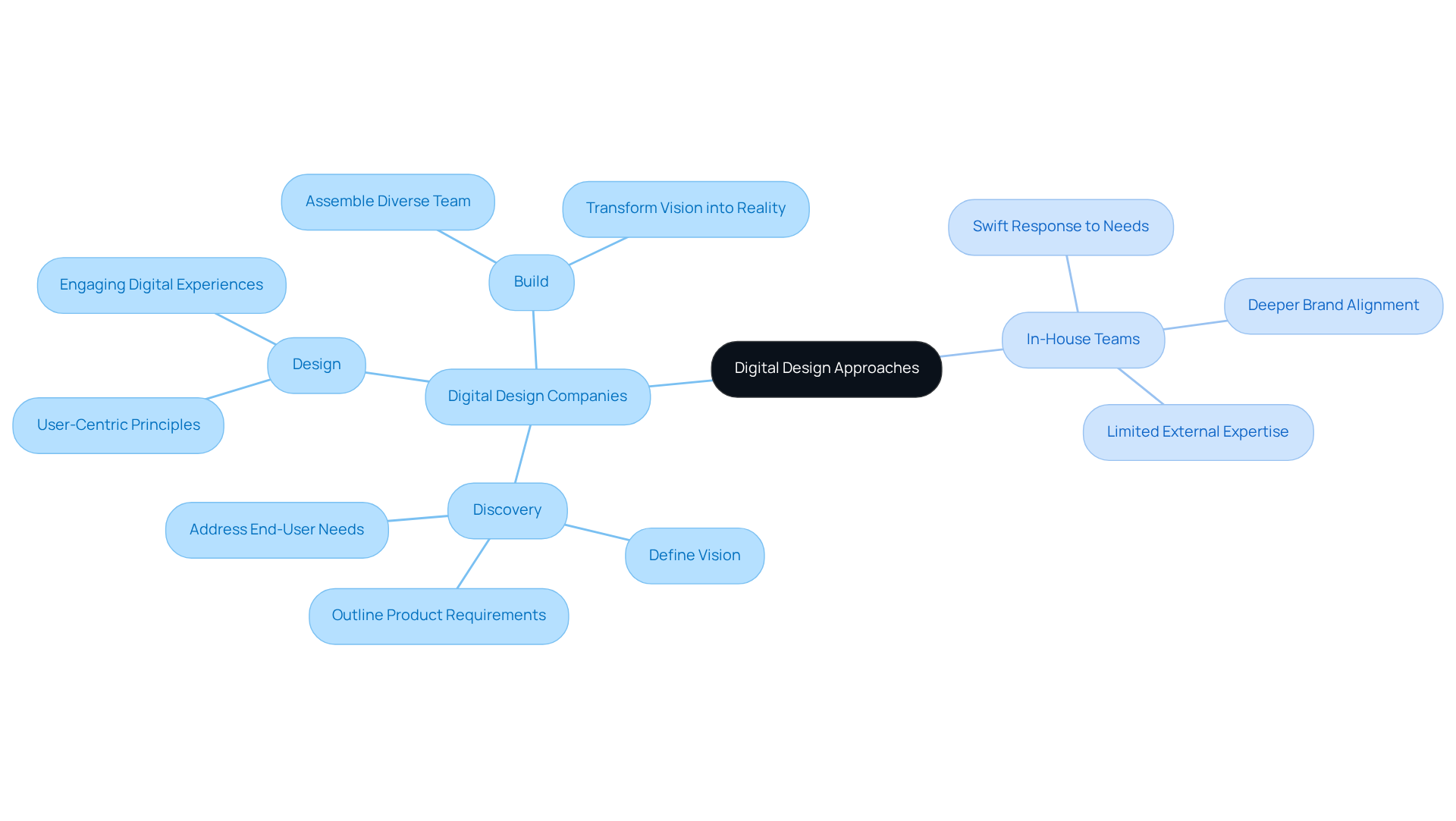
Digital design companies, including Studio Graphene, excel in a broad spectrum of services, such as product creation, development, and deployment. These agencies collaborate with various clients across diverse industries, harnessing a wealth of perspectives and expertise to tackle complex projects creatively and efficiently. Their teams typically consist of experts with varied skill sets, enabling them to stay at the forefront of emerging technologies and design trends.
Studio Graphene's comprehensive digital product development services encompass three fundamental areas:
- Discovery
- Design
- Build
In the Discovery phase, we assist in defining your vision and outlining product requirements while addressing end-user needs. The Design phase merges creativity with user-centric principles to craft engaging and user-friendly digital experiences. Finally, in the Build phase, we assemble a diverse team dedicated to transforming your vision into reality.
Conversely, internal teams consist of dedicated staff members focused solely on one organization. This structure encourages a deeper alignment with the brand and a nuanced understanding of the company's goals and culture. While internal teams can respond more swiftly to urgent needs and feedback, they may lack the extensive expertise and creative perspectives that external agencies offer, particularly in rapidly evolving sectors.
The decision to engage a digital creative agency versus relying on an internal team ultimately hinges on the organization's distinct requirements and strategic objectives. Factors such as scope, budget, and desired outcomes are pivotal in this decision-making process. Importantly, digital design companies have demonstrated their value through successful initiatives, underscoring their ability to deliver impactful solutions that foster business growth and enhance operational effectiveness.
Evaluating Pros and Cons of Digital Design Companies vs. In-House Teams
When comparing in-house teams to digital design companies, several pros and cons emerge that warrant careful consideration.
Digital Design Companies:
-
Pros:
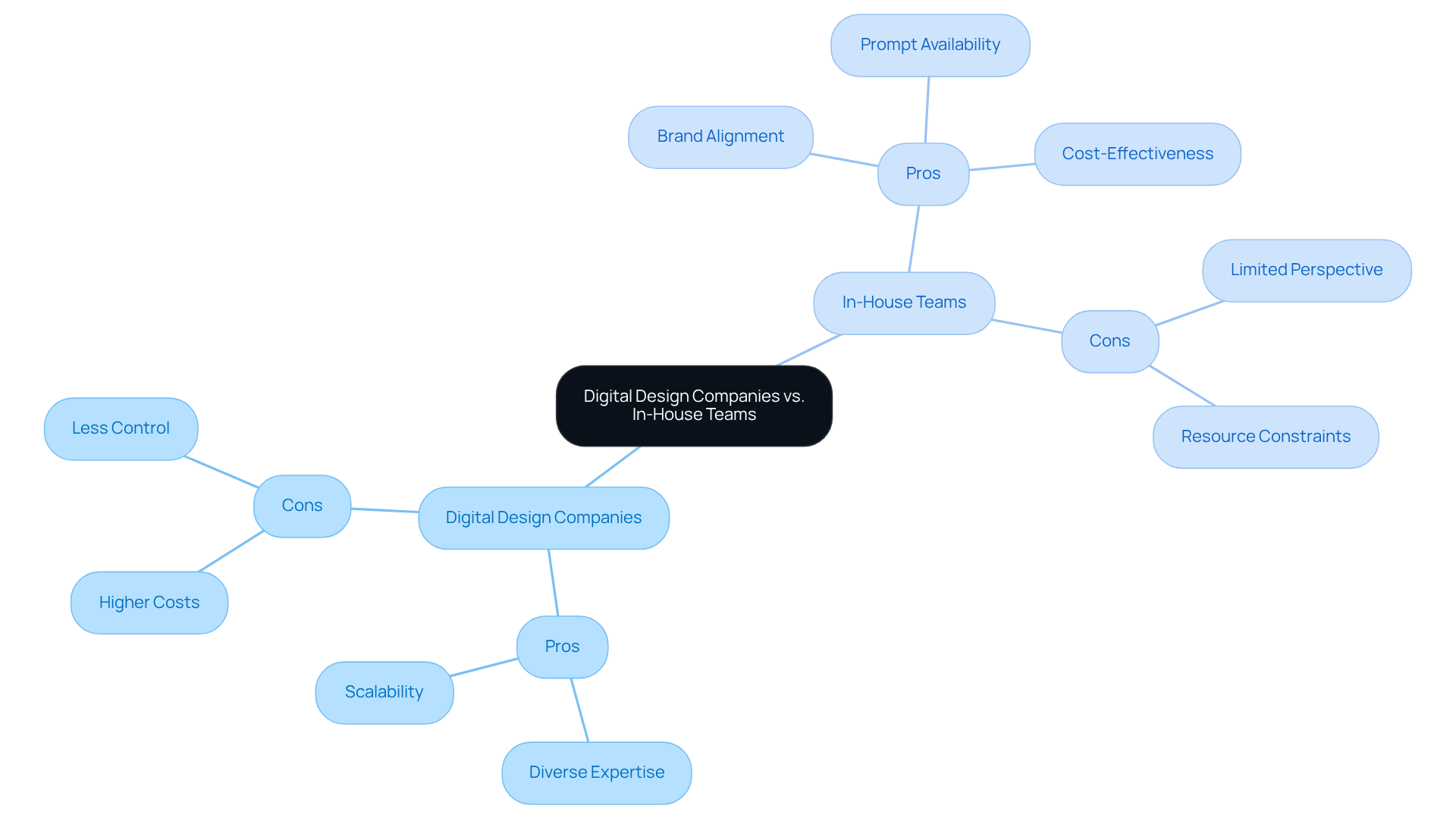
- Diverse Expertise: Agencies typically possess teams with varied skills and experiences, which enables them to tackle a wide range of projects effectively.
Access to the latest technologies enables digital design companies to be at the forefront of industry trends, allowing them to deliver innovative solutions. - Scalability: Agencies can swiftly adjust resources according to requirements, offering a level of adaptability that internal teams may lack.
- Diverse Expertise: Agencies typically possess teams with varied skills and experiences, which enables them to tackle a wide range of projects effectively.
-
Cons:
- Higher Costs: Engaging an agency can be more expensive than maintaining an in-house team, particularly for long-term projects.
- Less Control: Companies may experience reduced direct oversight of the creation process, potentially leading to misalignment with brand vision.
In-House Teams:
-
Pros:
- Brand Alignment: In-house teams possess a deeper understanding of the company's culture and objectives, resulting in designs that align closely with brand identity.
- Prompt Availability: Internal groups can respond swiftly to urgent needs and feedback, facilitating a more agile workflow.
- Cost-Effectiveness: For ongoing initiatives, in-house teams can be more economical over time, as they do not incur the same overhead as agencies.
-
Cons:
- Limited Perspective: In-house teams may lack exposure to diverse ideas and practices that agencies bring from working with a variety of clients.
- Resource Constraints: Internal groups may face limitations in workforce and knowledge, particularly for specialized tasks requiring advanced skills.
Ultimately, the decision between digital design companies and internal teams depends on specific business needs, project requirements, and financial considerations. As the digital landscape evolves, understanding these dynamics will be essential for CTOs aiming to enhance their planning and development strategies.
Cost Considerations: Digital Design Companies vs. In-House Teams
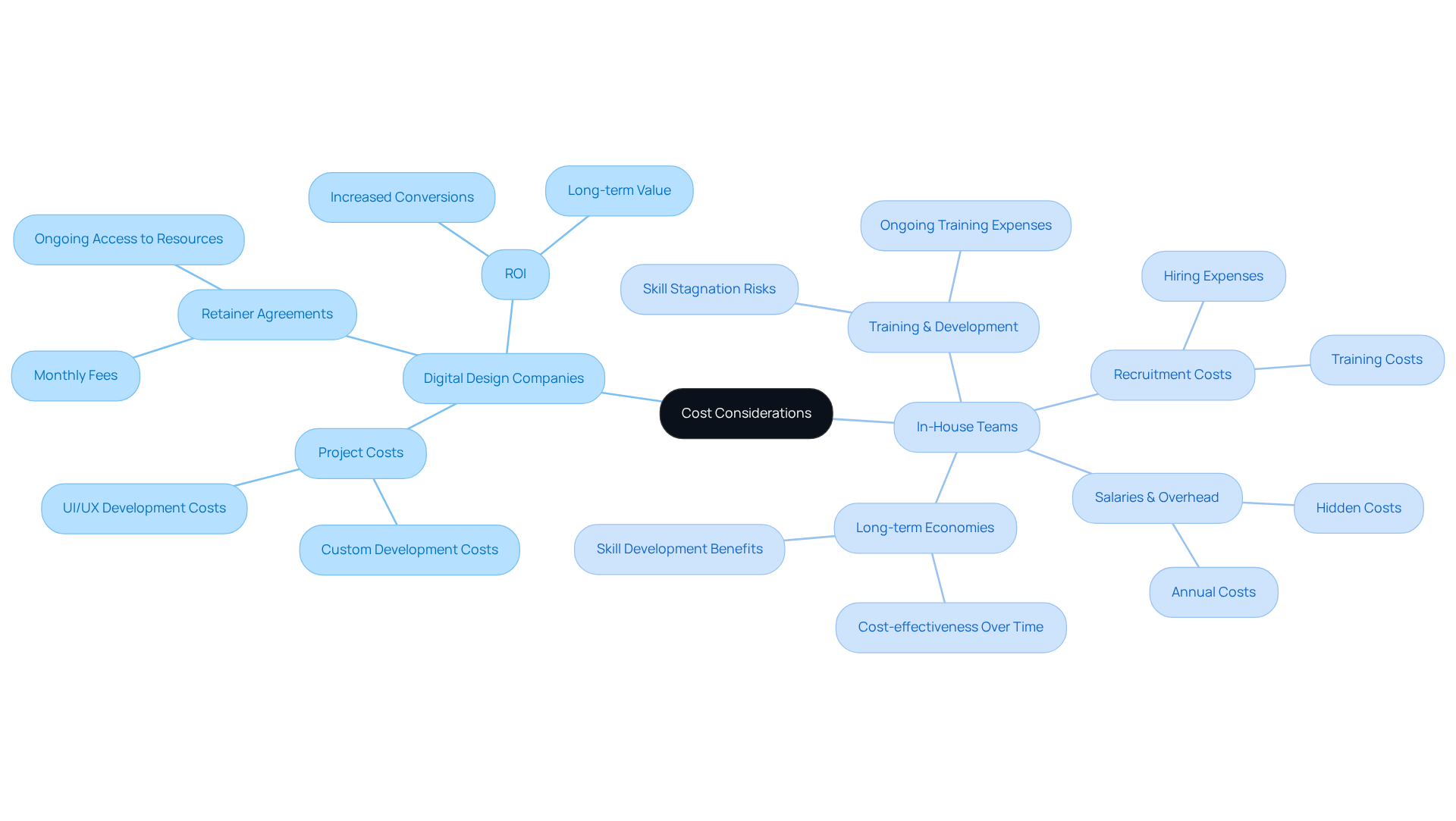
When evaluating costs, several factors come into play for both in-house teams and digital design companies.
Digital design companies typically charge on a project basis, with costs ranging from a few thousand to over $200,000, depending on the project's complexity and duration. For instance, fully custom development can start at $10,000 and escalate significantly based on specific requirements. UI/UX development expenses generally vary from $10,000 to $200,000+ based on scope, complexity, and timeline. Furthermore, some companies may opt for a retainer agreement, providing ongoing access to agency resources for a fixed monthly fee, which can range from €2,000 to over €10,000. While initial costs may be higher, the expertise and efficiency of digital design companies can result in a higher return on investment. Companies investing around 10% of their development budget in UX report an impressive 83% rise in conversions, showcasing the value of professional design services.
In-House Teams: In-house teams incur fixed costs such as salaries, benefits, and overhead, which can easily exceed €350,000 annually for a five-person team when considering recruitment, training, and software costs. The true expense of recruiting a new employee might be nearly twice their stated salary amount in the first year alone, highlighting the concealed costs related to internal hiring. Companies must invest in ongoing training and development to keep their internal staff updated with the latest design trends and technologies, which can be a significant expense. For ongoing projects, internal groups may be more economical over time, as they remove the necessity for recurring agency charges. However, the effectiveness of internal groups can be restricted by their individual skill sets, which may not align with the specialized knowledge available in agencies. Agencies, including digital design companies, grant access to a cross-disciplinary group of experts, providing a wide range of knowledge that internal groups may lack.
Ultimately, the choice between employing digital design companies or maintaining an internal group should consider both short-term expenses and long-term ROI, along with the specific requirements and objectives of the business.
Flexibility and Scalability: Digital Design Companies vs. In-House Teams
When evaluating the choice between in-house teams and digital design companies, flexibility and scalability are critical factors.
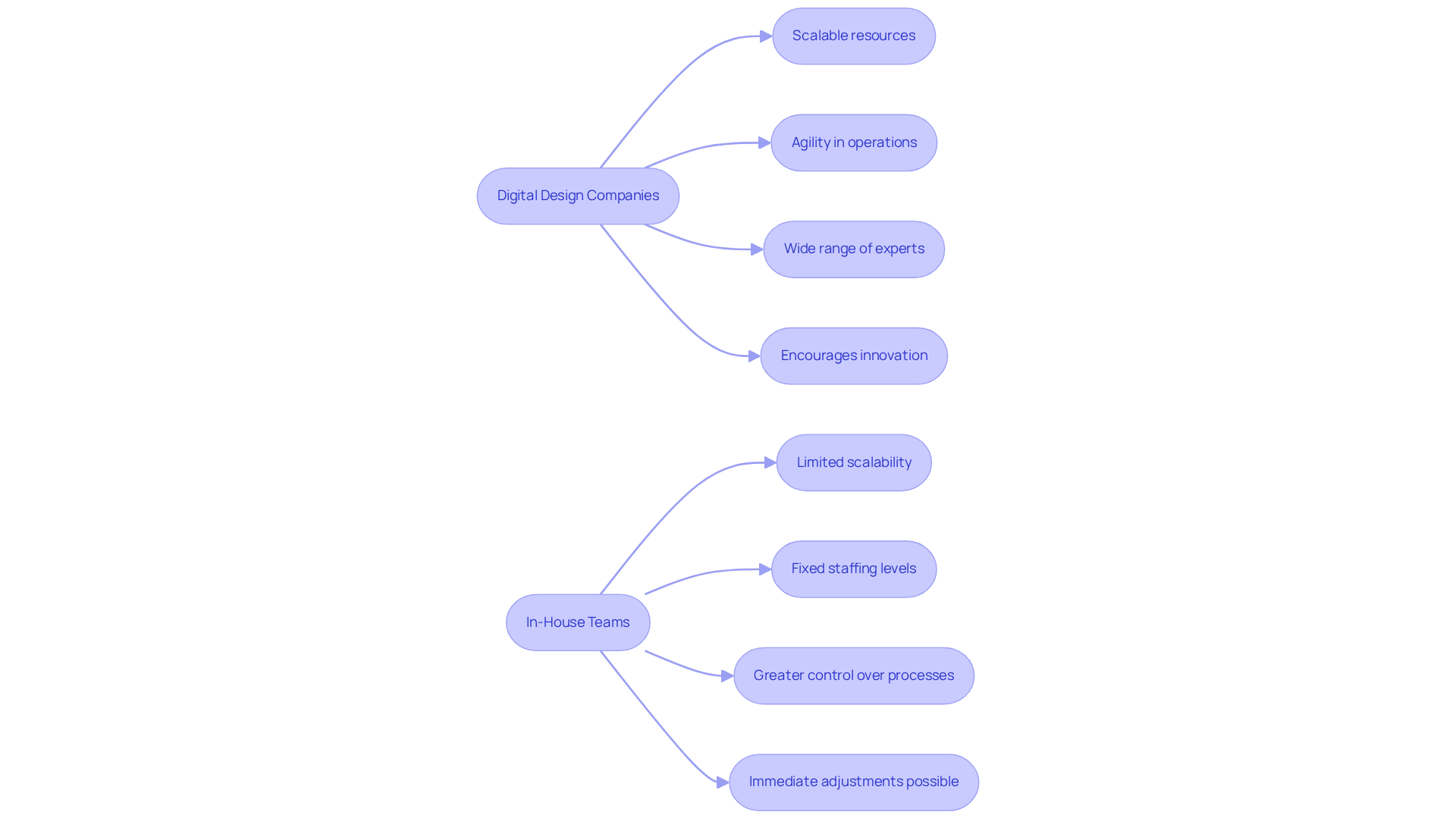
Digital design companies provide scalable resources. Agencies possess the ability to rapidly adjust their team size and expertise in response to project demands. This agility enables them to scale operations efficiently, accommodating fluctuating workloads without compromising quality. Additionally, agencies generally have access to a wide range of experts, allowing them to create the ideal team for every assignment. This diversity enhances project quality and fosters innovative solutions tailored to specific challenges. As Steven Johnson notes, innovation often arises from collaboration rather than isolation, a key strength of digital design agencies.
In contrast, in-house teams face limited scalability. They often encounter challenges in scaling quickly due to fixed staffing levels, which can lead to bottlenecks during peak phases, hindering responsiveness and potentially delaying timelines. Notably, only 47% of initiatives are managed by a qualified manager, suggesting possible deficiencies in management skills within internal groups. Conversely, internal teams provide greater control over timelines and processes. This structure allows for immediate adjustments based on internal feedback and shifting priorities, ensuring alignment with organizational goals.
As organizations navigate the complexities of management, the adaptability offered by digital design companies becomes increasingly significant. For instance, 73% of organizations expect an increase in hybrid management practices over the next five years, highlighting the necessity for flexible strategies that can adapt to evolving needs. Furthermore, the projected growth of AI in project management—from $3.08 billion in 2024 to $7.4 billion by 2029—underscores how digital design companies leverage technology for scalability and efficiency. While in-house teams may provide stability and control, their scalability limitations can present substantial challenges in a rapidly evolving digital landscape.
Conclusion
Digital design companies and in-house teams each present distinct advantages and challenges that significantly impact an organization's approach to digital product development. This understanding is vital for CTOs and decision-makers who must align their strategies with both business objectives and project requirements. Choosing between the diverse expertise and scalability of agencies or the brand alignment and immediacy of internal teams necessitates a careful assessment of specific needs.
Key insights indicate that digital design companies excel in delivering a broad spectrum of skills and innovative solutions, while in-house teams cultivate a deeper connection to company culture and objectives. Cost implications are also crucial; agencies typically demand higher initial investments but may offer greater long-term returns through specialized expertise. Conversely, in-house teams might incur lower ongoing costs but could face limitations due to restricted resources and perspectives.
Ultimately, the decision between digital design companies and in-house teams warrants thorough consideration. It requires a comprehensive evaluation of immediate and future needs, budgetary constraints, and the desired quality of output. By weighing these factors, organizations can refine their digital strategies, ensuring competitiveness and responsiveness in an ever-evolving landscape. Embracing the right approach fosters innovative solutions that drive growth and operational excellence.