
AI
our blog
How Long Does It Take to Build an App? Key Phases Explained

Overview
The duration required to build an application can vary significantly based on its complexity. Simple applications typically require between 2 to 4 months for development, while those of medium complexity may take 4 to 7 months. In contrast, complex applications often extend from 9 months to over a year. This timeline is substantiated by a breakdown of the development phases, which include:
- Planning
- Design
- Testing
Each of these phases collectively influences the overall duration and resource allocation necessary for successful app development.
Introduction
Understanding the timeline for app development is crucial for anyone aiming to bring their ideas to life in the digital space. The journey from concept to launch can vary widely, influenced by factors such as app complexity, team expertise, and necessary integrations. As potential app creators ponder the question, "How long does it take to build an app?", they often face the challenge of balancing ambition with realistic timelines.
What are the key phases that dictate this timeline? Furthermore, how can stakeholders effectively navigate them to ensure a successful launch?
Understand the App Development Timeline
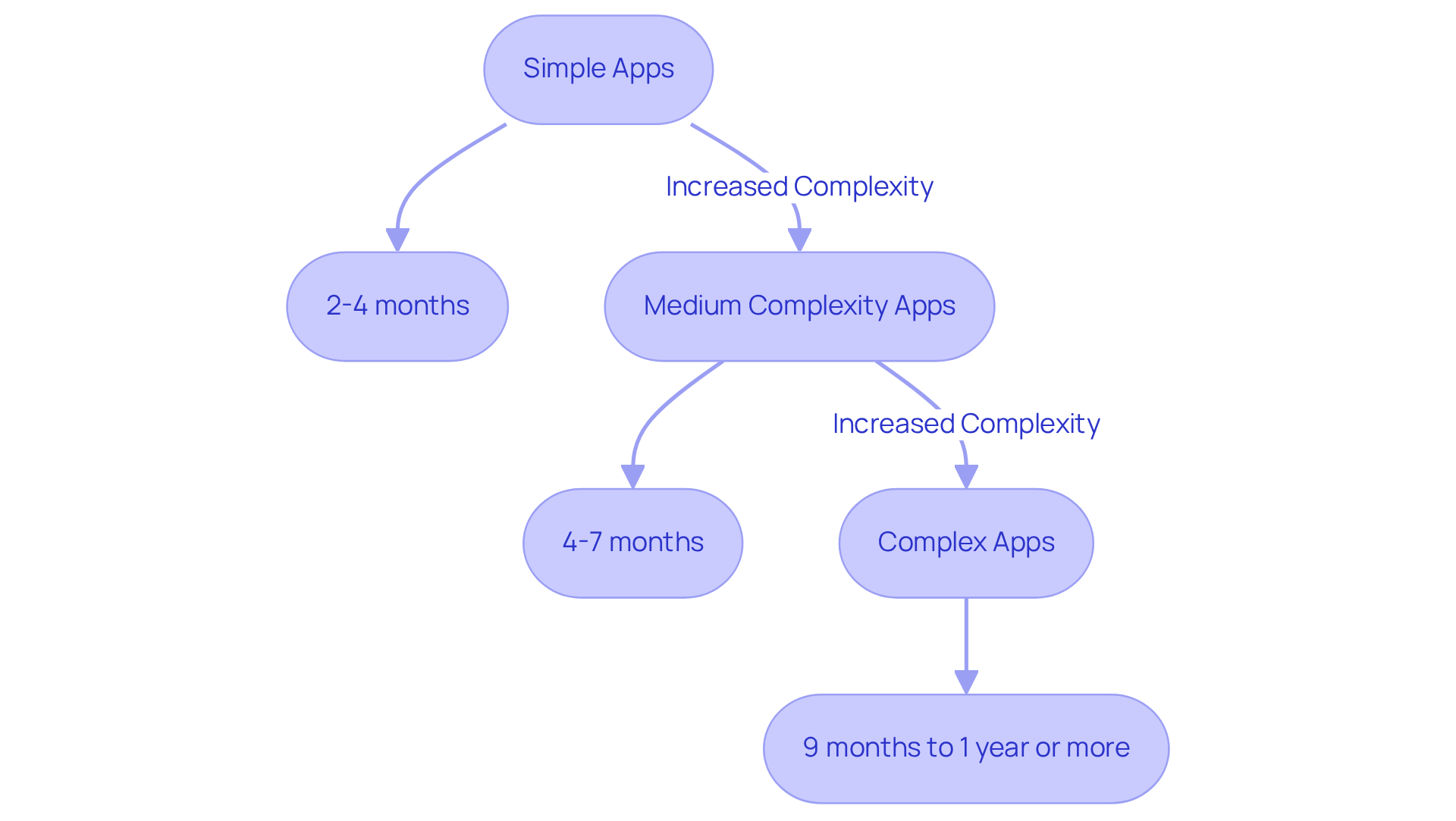
How long does it take to build an app can vary significantly based on the application's complexity. When considering how long does it take to build an app, simple apps typically require a development period of 2 to 4 months, whereas medium-complexity apps may take between 4 to 7 months. In contrast, when considering complex applications, particularly those that incorporate advanced functionalities or integrations, one might wonder how long does it take to build an app, with timelines extending from 9 months to over a year. On average, when discussing how long does it take to build an app, the timeline for app development ranges from 3 months for launching a Minimum Viable Product (MVP) to 9 months for a fully scaled product. Additionally, the planning stage generally spans about 2 to 3 weeks, while the entire discovery process may demand 40 to 80 hours. Understanding these timelines is crucial for stakeholders, enabling them to allocate resources efficiently and manage expectations throughout the development process, especially considering that the expertise of the team can significantly influence the project's pace. Furthermore, stakeholders should recognize that the review process for app submissions typically takes 2 to 7 days for the Apple App Store and 3 to 6 days for the Google Play Store, an important consideration in the overall timeline.
Key Phases of the Timeline
- Simple Apps: 2-4 months
- Medium Complexity Apps: 4-7 months
- Complex Apps: 9 months to 1 year or more
By categorizing apps into these phases, stakeholders can allocate time and resources more effectively for each stage of development.
Break Down the Development Process into Phases
The app development process is structured into several critical phases, each contributing significantly to the overall success of the project.
-
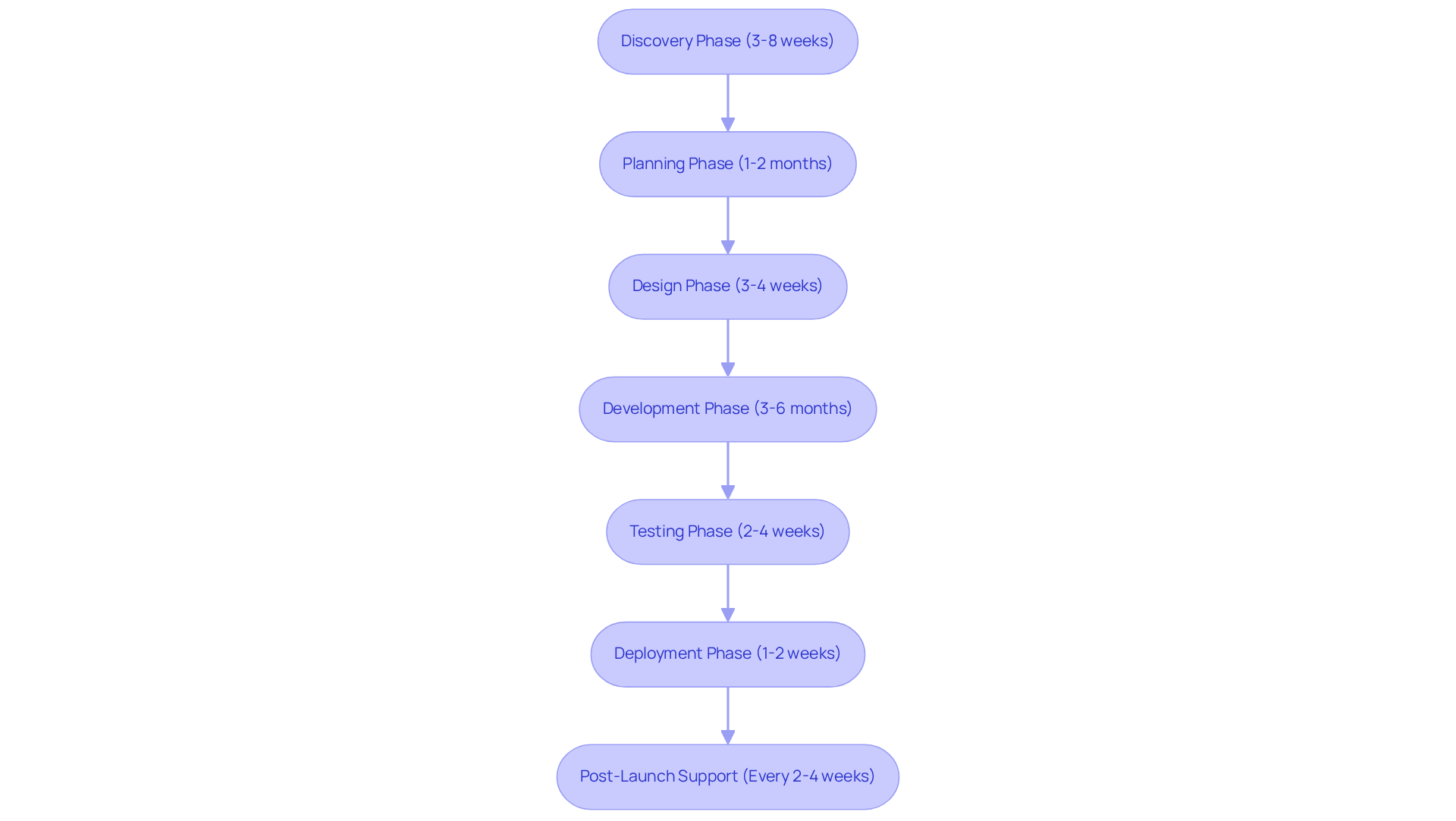
Discovery Phase: This foundational stage is crucial for gathering requirements, understanding user needs, and defining the app's purpose. Typically lasting between 3 to 8 weeks, this phase maximizes the likelihood of project success by identifying strengths and weaknesses early on. Key activities include stakeholder interviews, subject area research, and competitor analysis, which help create a clear project roadmap and budget assessment.
-
Planning Phase: In this phase, the project scope is defined, and a detailed roadmap is established. Lasting 1 to 2 months, specific objectives and schedules are established, ensuring alignment with business goals.
-
Design Phase: The UI/UX design is developed here, focusing on creating intuitive interfaces that enhance user experience. This phase typically lasts 3 to 4 weeks and involves wireframing and prototyping to visualize the app's layout and functionality.
-
Development Phase: Here, the actual coding and building of the app occur, lasting from 3 to 6 months depending on the app's complexity. Employing frameworks such as React Native or Flutter can decrease the duration by 30-40% when aiming at various platforms.
-
Testing Phase: Quality assurance is conducted to identify and fix bugs, usually taking 2 to 4 weeks. This phase is essential for ensuring the app's reliability and performance, as thorough testing can prevent issues that lead to user uninstalls.
-
Deployment Phase: The app is launched on the desired platforms, which can take 1 to 2 weeks. This phase includes final preparations and ensuring all functionalities are operational.
-
Post-Launch Support: Ongoing maintenance and updates are vital for the app's longevity, with updates typically planned every 2 to 4 weeks to address user feedback and improve functionality.
By comprehending these stages and their corresponding timelines, stakeholders can efficiently manage expectations and guarantee a more seamless process, particularly in understanding how long does it take to build an app.
Identify Factors Influencing Development Time
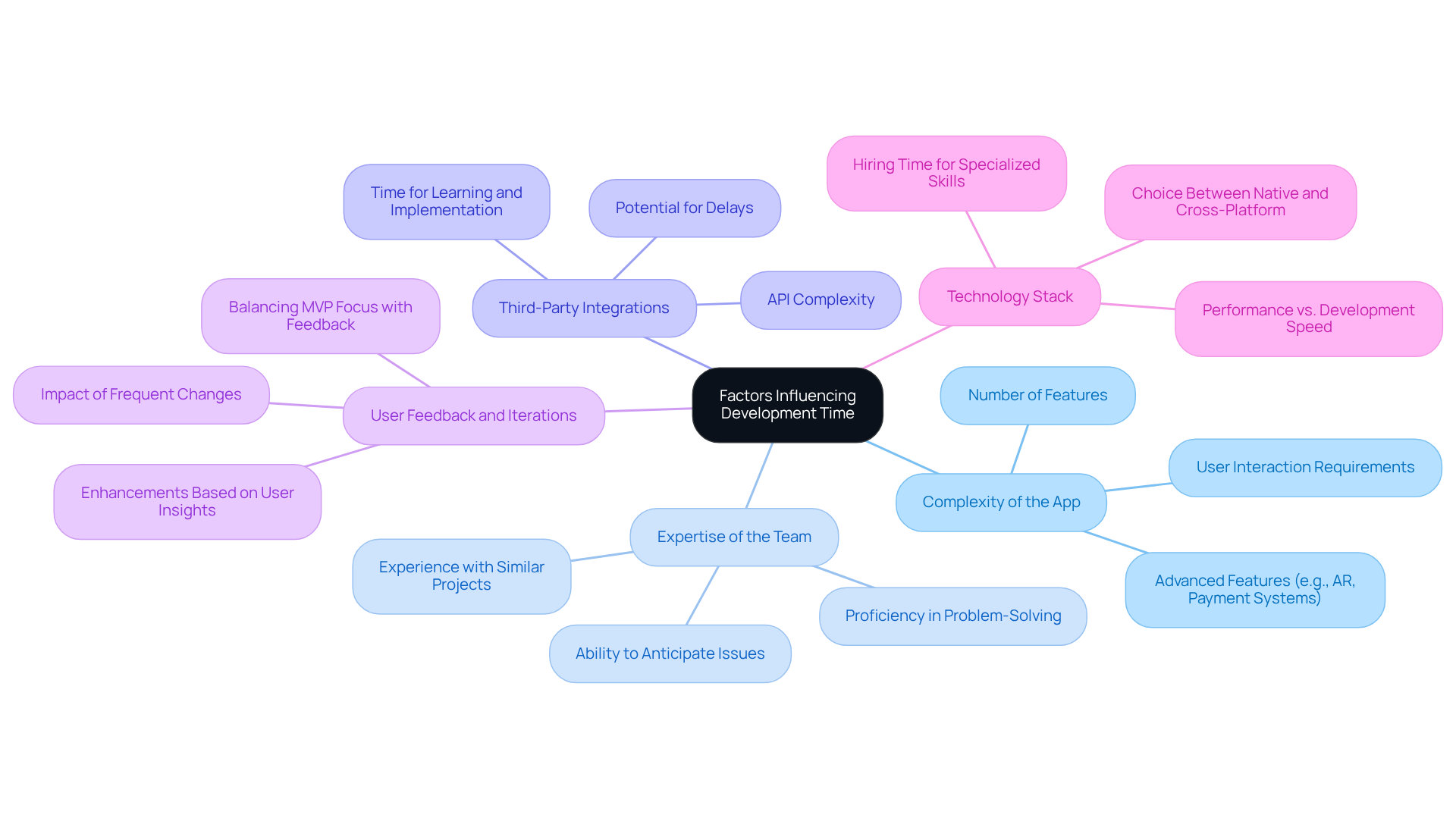
Several factors significantly influence how long does it take to build an app.
-
Complexity of the App: The number of features and integrations directly correlates with development time. More complex applications, such as those incorporating augmented reality or advanced payment systems, require extensive coding, testing, and integration efforts. For instance, creating a gaming application typically demands more effort than an e-commerce app due to intricate user interactions and experience needs. The development of an easy-to-use mobile application and adaptable web platform with a straightforward interface for ordering in the case of Alchemy Wings exemplifies how long does it take to build an app and how complexity can influence schedules.
-
Expertise of the Team: A proficient group can navigate obstacles more effectively, greatly reducing total creation time. Skilled developers excel at anticipating potential problems and applying efficient solutions, which can save weeks or even months in the project timeline. As noted, 'Good programmers know what to write. Great ones know what to rewrite and reuse.' This expertise is crucial when developing innovative solutions like the mobile app for Alchemy Wings, particularly in understanding how long does it take to build an app that ensures a seamless user experience.
-
Third-Party Integrations: Incorporating external services can complicate the process and extend schedules. Ensuring seamless third-party integrations may prolong the project duration, as the integration of APIs often requires additional time to comprehend and execute their complexities. This can lead to unforeseen delays if not managed appropriately. For example, the delivery validation system for individual drivers in the Alchemy Wings app necessitated careful integration to ensure functionality.
-
User Feedback and Iterations: Frequent changes based on user feedback can lead to delays. While iterative progress is vital for enhancing the app, it raises concerns about how long does it take to build an app if not balanced with a clear focus on the Minimum Viable Product (MVP). However, regular user feedback can improve app quality without prolonging timelines, presenting a more balanced perspective on the iterative process. The development of the Alchemy Wings app benefited from user insights, aiding in refining the ordering process.
-
Technology Stack: The choice of programming languages and frameworks can impact the pace of creation. Native apps typically offer better performance but require separate development efforts for iOS and Android, while cross-platform solutions can expedite development but may compromise user experience. Additionally, the time taken to hire the right talent or the waiting time to complete existing work can cause delays in mobile app project deadlines.
By recognizing these factors, stakeholders can better prepare for potential challenges and determine how long does it take to build an app, adjusting their timelines accordingly. Understanding the complexity of features, the proficiency of the team, and the implications of third-party integrations is essential for efficient project management and timely delivery.
Implement Strategies to Speed Up Development
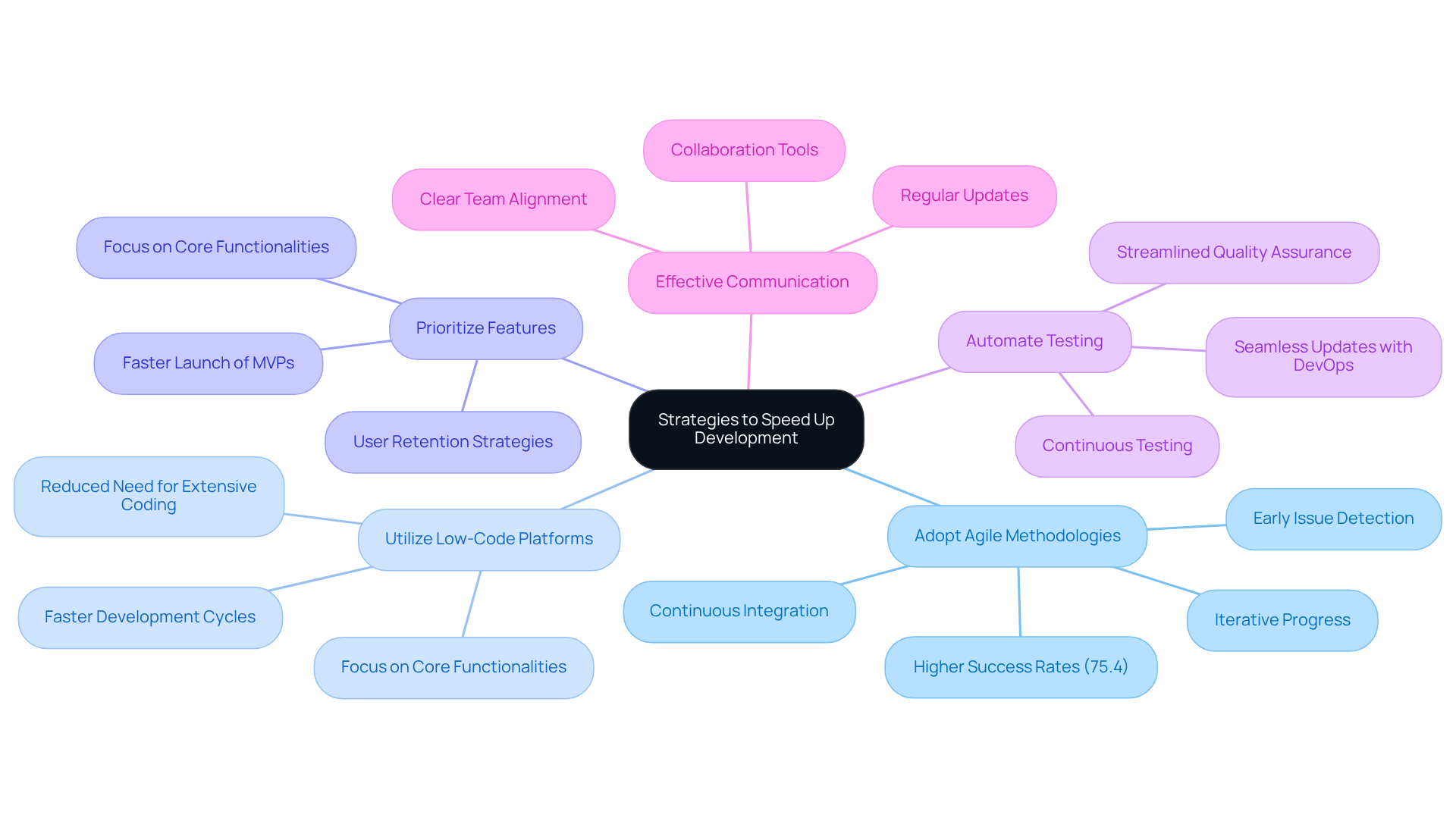
To expedite the app development process, consider implementing the following strategies:
-
Adopt Agile Methodologies: Agile practices promote iterative progress, enabling teams to make rapid adjustments based on user feedback. This approach enhances customer satisfaction and leads to higher project success rates, with Agile projects achieving a 75.4% success rate compared to traditional methods. Continuous integration is integral to Agile, allowing product developers to regularly merge code changes into a central repository, followed by automated builds and tests. This not only improves efficiency but also ensures that issues are identified and resolved early, enhancing the overall quality of the app.
-
Utilize Low-Code Platforms: Employing low-code platforms can significantly shorten the coding process by reducing the necessity for extensive programming. This allows teams to focus on delivering core functionalities quickly, facilitating faster launches of Minimum Viable Products (MVPs).
-
Prioritize Features: Concentrate on developing essential features first. By focusing on core functionalities, teams can launch MVPs more swiftly, which is crucial in a competitive market where user retention is a significant challenge.
-
Automate Testing: Implementing automated testing tools streamlines the quality assurance process, allowing for continuous testing throughout development. This proactive approach helps catch issues early, ensuring a polished product by launch. The integration of DevOps automation further supports this by enabling one-click deployments and rollbacks, making updates seamless and efficient.
-
Effective Communication: Maintaining clear communication among team members is vital to avoid misunderstandings and delays. Regular updates and collaborative tools enhance alignment, leading to improved team dynamics and project outcomes.
By applying these strategies, including the integration of continuous integration and DevOps practices, teams can significantly enhance their efficiency and reduce the overall time required to answer how long does it take to build an app, aligning with the evolving demands of the mobile app landscape.
Conclusion
Understanding the timeline for app development is essential for stakeholders navigating the complexities of the process. The duration can greatly vary, depending on the app's complexity, ranging from a few months for simpler applications to over a year for more intricate ones. By recognizing these timelines, stakeholders can better allocate resources and manage expectations, ensuring a smoother development journey.
The app development process can be broken down into key phases:
- Discovery
- Planning
- Design
- Development
- Testing
- Deployment
- Post-launch support
Each phase carries its own timeline and significance, underscoring the importance of thorough preparation and execution. Furthermore, several factors influence development time, including:
- App complexity
- Team expertise
- Third-party integrations
- User feedback
- Chosen technology stack
Understanding these elements is crucial for efficient project management.
Ultimately, adopting strategies such as:
- Agile methodologies
- Utilizing low-code platforms
- Prioritizing features
- Automating testing
- Maintaining effective communication
can significantly accelerate the app development process. By implementing these best practices, stakeholders enhance efficiency and navigate the challenges of app development, leading to successful project outcomes. Embracing these insights empowers individuals and teams to make informed decisions, ensuring their app development endeavors are both timely and effective.