
AI
our blog
How Long Does It Take to Create an App? Key Factors Explained

Overview
Creating an app typically takes between 2 to 12 months, a timeline influenced by factors such as app complexity, team size, and the selected platform. Understanding the various stages of development—from ideation and design to testing and deployment—is crucial. Each stage contributes significantly to the overall timeline. By grasping these phases, stakeholders can set realistic expectations and manage resources effectively. This knowledge is essential for navigating the complexities of app development.
Introduction
Creating a mobile app presents both excitement and challenges, with timelines that can vary significantly due to multiple factors. For stakeholders, comprehending the nuances of app development is crucial for effective resource allocation and expectation management. Given the myriad of variables—from the app's complexity to the size of the development team—how can one accurately assess the time needed for a successful launch? This article explores the essential stages of app development, the factors that influence timelines, and strategies to streamline the process. By providing valuable insights, it aims to equip anyone looking to navigate the app creation journey with the knowledge necessary for success.
Understand the App Development Timeline
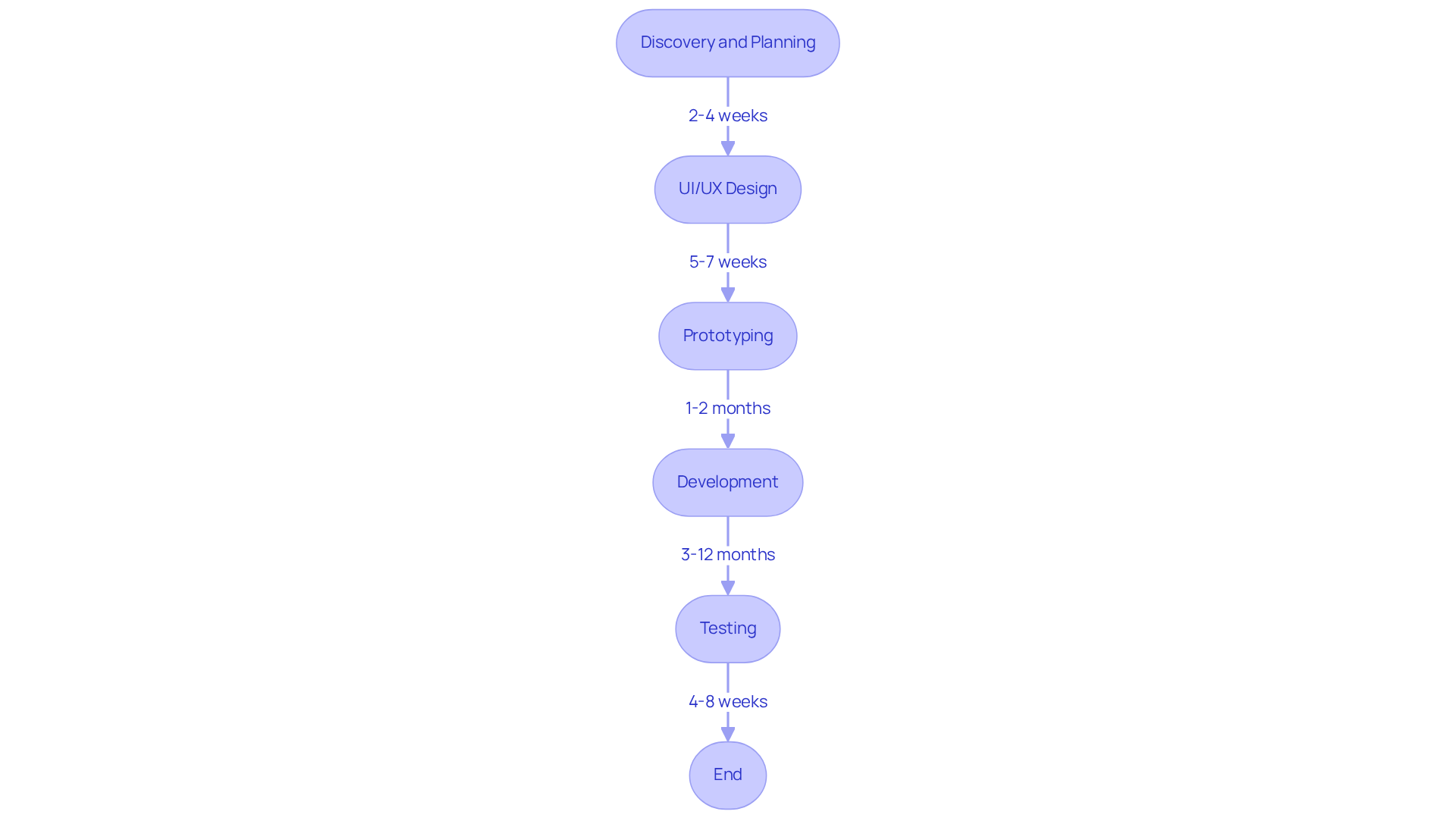
When considering how long does it take to create an app, it's important to note that the timeline can vary significantly based on several factors, including the app's complexity, team size, and chosen platform—be it iOS, Android, or cross-platform. Typically, when considering how long does it take to create an app, the entire process spans from 2 to 12 months.
Initially, the creation process commences with a discovery and planning stage, lasting approximately 2 to 4 weeks. Following this, the UI/UX design phase generally extends for 5 to 7 weeks, during which designers craft intuitive interfaces. Prototyping adds an additional 1 to 2 months, allowing for feedback and adjustments before large-scale production begins.
For example:
- A simple app might take around 3 to 4 months.
- Applications of medium complexity, which include features such as user authentication and payment gateways, usually require about 4 to 6 months.
- More complex applications, particularly those incorporating advanced functionalities like real-time messaging or AI integration, can push the timeline to 9 to 12 months or even longer.
The testing phase typically spans 4 to 8 weeks, ensuring the app is devoid of bugs and meets quality standards. Understanding how long it takes to create an app is crucial for stakeholders, enabling them to allocate resources effectively and set realistic expectations, ultimately facilitating a smoother development process.
Explore Key Stages of App Development
The app development process is methodically structured into several essential stages, each playing a pivotal role in the overall success of the application.
-
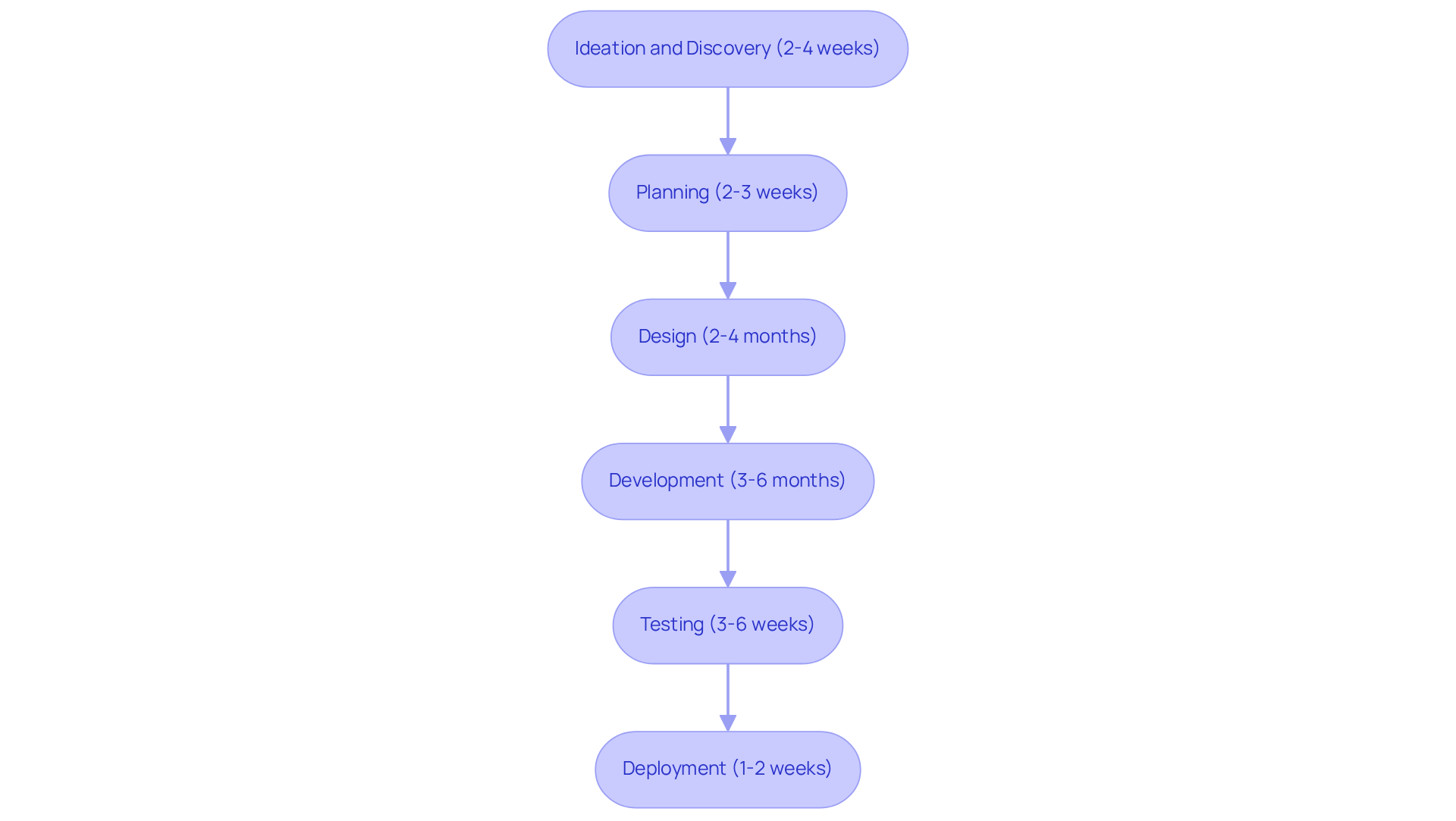
Ideation and Discovery: This foundational phase involves brainstorming ideas, conducting market research, and defining the app's purpose and target audience. Generally, this phase endures 2-4 weeks, enabling teams to align on goals and client needs.
-
Planning: During this stage, detailed specifications are crafted, including feature lists, client stories, and technical requirements. This phase typically takes 2-3 weeks, setting a clear roadmap for development.
-
Design: UI/UX design is crucial for audience engagement and satisfaction. This phase can last 2-4 months, focusing on creating wireframes and prototypes that visualize the app's functionality and aesthetics. Emphasizing a client-focused approach during this phase can significantly enhance user experience, as 23% of mobile applications fail after the first year due to subpar experiences.
-
Development: The actual coding of the app occurs in this stage, which generally spans 3-6 months, depending on the complexity of the features being implemented. Each major feature can add 1-2 weeks to the timeline, while complex functionalities may require an additional 3-4 weeks. Collaboration and transparency among team members during this phase are essential for maintaining efficiency and quality.
-
Testing: Quality assurance is vital to ensure the app operates correctly and meets expectations. This phase can take 3-6 weeks, during which rigorous testing identifies and resolves bugs before launch. Bill Gates once stated, 'Your most dissatisfied clients are your greatest source of learning,' underscoring the significance of feedback in this stage.
-
Deployment: Finally, the app is launched on the chosen platforms, which may take an additional 1-2 weeks for app store approvals. A beta or soft launch to a restricted group for 2-4 weeks can also be advantageous for collecting feedback and making necessary adjustments. Post-launch support and maintenance are crucial for keeping the app secure and up-to-date, ensuring it continues to meet user needs over time.
Understanding these phases and their average durations is essential for effective project management and ensuring a successful app launch.
Identify Factors Affecting Development Time
Several factors can significantly affect how long it takes to create an app.
-
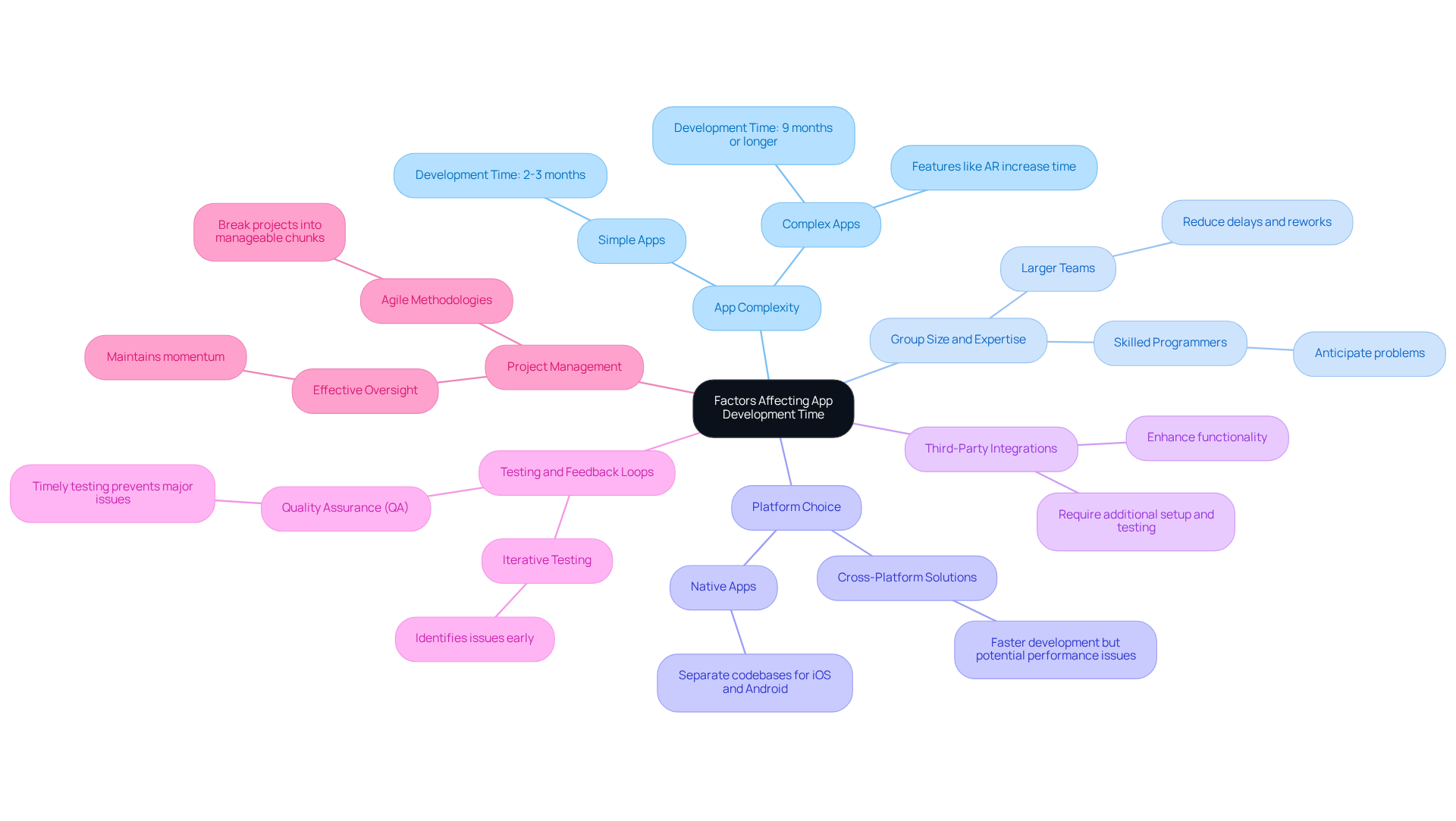
App Complexity: The complexity of an app is a primary determinant of its development timeline. Simple applications, which typically have fewer features and screens, may take around 2 to 3 months to develop. In contrast, complex apps, such as those requiring real-time synchronization or advanced functionalities like augmented reality, can take 9 months or longer. Each additional feature necessitates more coding, testing, and debugging, which can substantially extend the overall timeline.
-
Group Size and Expertise: The size and experience of the design group play a crucial role in determining how quickly tasks can be completed. A larger, seasoned team can navigate challenges more efficiently, often reducing delays and reworks. For example, skilled programmers can anticipate potential problems and apply optimal coding techniques, which can greatly enhance the creation process.
-
Platform Choice: The decision to develop for multiple platforms, such as iOS and Android, can complicate timelines. Native applications necessitate distinct codebases, which can extend the process. Conversely, cross-platform solutions, although typically quicker to create, may affect performance and user experience.
-
Third-Party Integrations: Incorporating external APIs or services can add layers of complexity to the creation process. While these integrations can enhance functionality, they often require additional time for setup, testing, and ensuring compatibility with existing systems.
-
Testing and Feedback Loops: Iterative testing and the incorporation of client feedback are essential for delivering a high-quality product. Although these processes can extend the timeline, they are crucial for identifying and resolving issues early, ultimately leading to a more robust application. Timely and regular Quality Assurance (QA) testing can avert significant problems later in the process, ensuring that the completed product meets high standards for functionality and user experience.
-
Project Management: Effective project oversight can enhance the app creation process, enabling groups to sustain momentum and adjust to changes swiftly. Understanding these factors allows CTOs to establish realistic expectations about how long it takes to create an app and make informed choices throughout the app creation process, ultimately resulting in a more successful launch.
Implement Strategies to Accelerate Development
To accelerate app development, organizations should consider the following strategies:
-
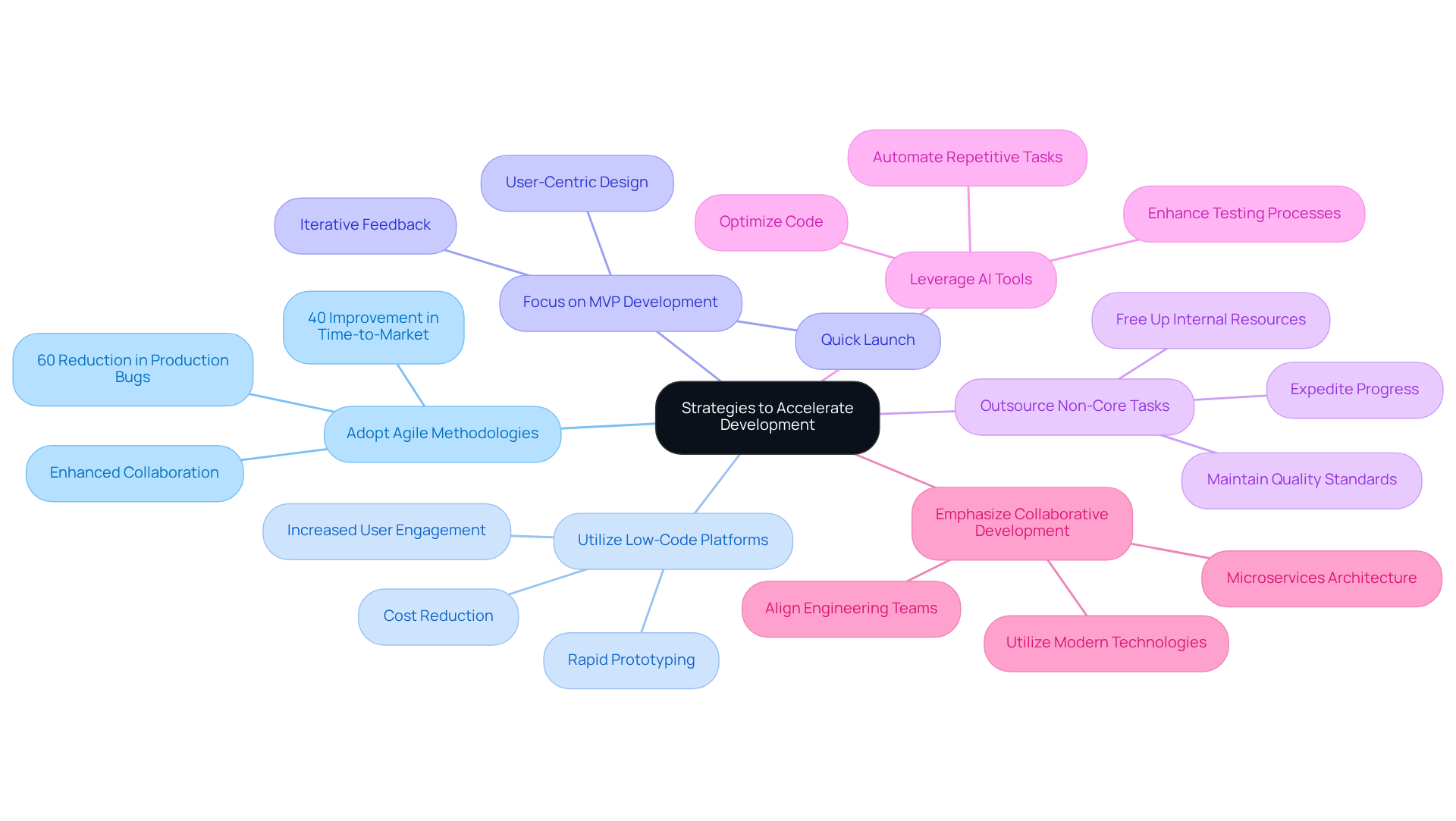
Adopt Agile Methodologies: Implementing agile practices fosters iterative development, enabling teams to make quick adjustments based on user feedback. This method not only shortens the overall project duration, which is important for understanding how long does it take to create an app, but also enhances collaboration and communication among group members. For instance, organizations that have adopted Agile report a 40% improvement in time-to-market and a notable reduction in production bugs, demonstrating its effectiveness in optimizing the development process.
-
Utilize Low-Code Platforms: Low-code platforms facilitate rapid prototyping and deployment, allowing teams to create applications more efficiently. Studio Graphene's experience with Canopy illustrates how leveraging low-code solutions can yield a flexible, low-maintenance website, significantly reducing costs and enhancing user engagement. By minimizing the need for extensive coding, these platforms enable faster iterations and quicker responses to market demands, ultimately influencing how long does it take to create an app.
-
Focus on MVP Development: Initiating projects with a Minimum Viable Product (MVP) allows teams to launch quickly and gather essential feedback from users. This iterative approach ensures that subsequent stages are guided by actual user requirements, ultimately leading to a more successful final product, and it also raises the question of how long does it take to create an app. The collaborative development of Canopy's enhanced rental app exemplifies how a focus on user-centric design can drive superior outcomes.
-
Outsource Non-Core Tasks: Delegating specific tasks to external teams can free up internal resources, enabling core team members to concentrate on critical aspects of the project. This strategy can significantly expedite overall progress while maintaining quality standards, particularly when considering how long does it take to create an app.
-
Leverage AI Tools: Utilizing AI for automating repetitive tasks, optimizing code, and enhancing testing processes can lead to quicker production cycles. AI-driven tools assist teams in identifying issues early, which minimizes the time spent on debugging and can influence how long does it take to create an app, ensuring a smoother development experience. Studio Graphene's comprehensive build capabilities, including AI integration, highlight the potential for maximizing efficiency and security through DevOps automation.
-
Emphasize Collaborative Development: Collaborating closely with engineering teams, such as Canopy's, ensures that all aspects of the app are aligned and optimized. Employing technologies like ReactNative for Web and Node.js, along with a microservices architecture, allows teams to work simultaneously on different components, enhancing efficiency and robustness.
By integrating these strategies, organizations can effectively enhance their app development processes and better assess how long does it take to create an app, ensuring timely and successful launches.
Conclusion
Understanding the timeline for app development is crucial for anyone embarking on this journey. The duration can range from a few months to over a year, heavily influenced by factors such as app complexity, team expertise, and the chosen platform. By grasping the various stages of development—from ideation to deployment—stakeholders can better manage expectations and resources.
Key insights highlight the importance of each development phase, including:
- Planning
- Design
- Coding
- Testing
The complexity of the app plays a significant role; simpler applications take less time compared to those requiring advanced features. Furthermore, effective project management and the integration of strategies like Agile methodologies, low-code platforms, and AI tools can notably accelerate the development process.
Ultimately, the significance of understanding how long it takes to create an app cannot be overstated. By acknowledging the various factors and stages involved, organizations can make informed decisions that lead to successful app launches. Embracing efficient strategies not only streamlines the development process but also enhances the quality of the final product, ensuring it meets user needs and stands out in a competitive market.