
AI
our blog
Master the Agile Scrum Framework for Effective Team Collaboration

Overview
The Agile Scrum framework significantly enhances effective team collaboration through its structured approach, which encompasses clearly defined roles, iterative processes, and regular events that foster communication and continuous improvement.
By mastering Scrum's core principles—such as transparency and collaboration—along with the well-defined roles of Product Owner, Scrum Master, and Development Team, organizations can achieve better alignment and productivity. This ultimately leads to successful project outcomes.
Furthermore, embracing these principles not only streamlines workflows but also cultivates an environment conducive to innovation and adaptability.
Introduction
The Agile Scrum framework has emerged as a transformative methodology in project management, particularly within the realm of software development, where adaptability and collaboration are paramount. By breaking work into manageable sprints and fostering clear communication among team members, Scrum not only enhances productivity but also ensures that projects remain aligned with stakeholder expectations.
However, the challenge lies in effectively mastering its principles and roles to fully leverage its benefits. How can teams navigate this intricate landscape to achieve seamless collaboration and continuous improvement?
Understand the Agile Scrum Framework
The Agile Scrum framework is a prominent methodology in project management, especially in the field of software development. It emphasizes iterative advancement through brief intervals known as sprints, typically lasting two to four weeks. Each sprint encompasses planning, execution, review, and adaptation, enabling teams to respond adeptly to changes and consistently deliver functional increments of the product.
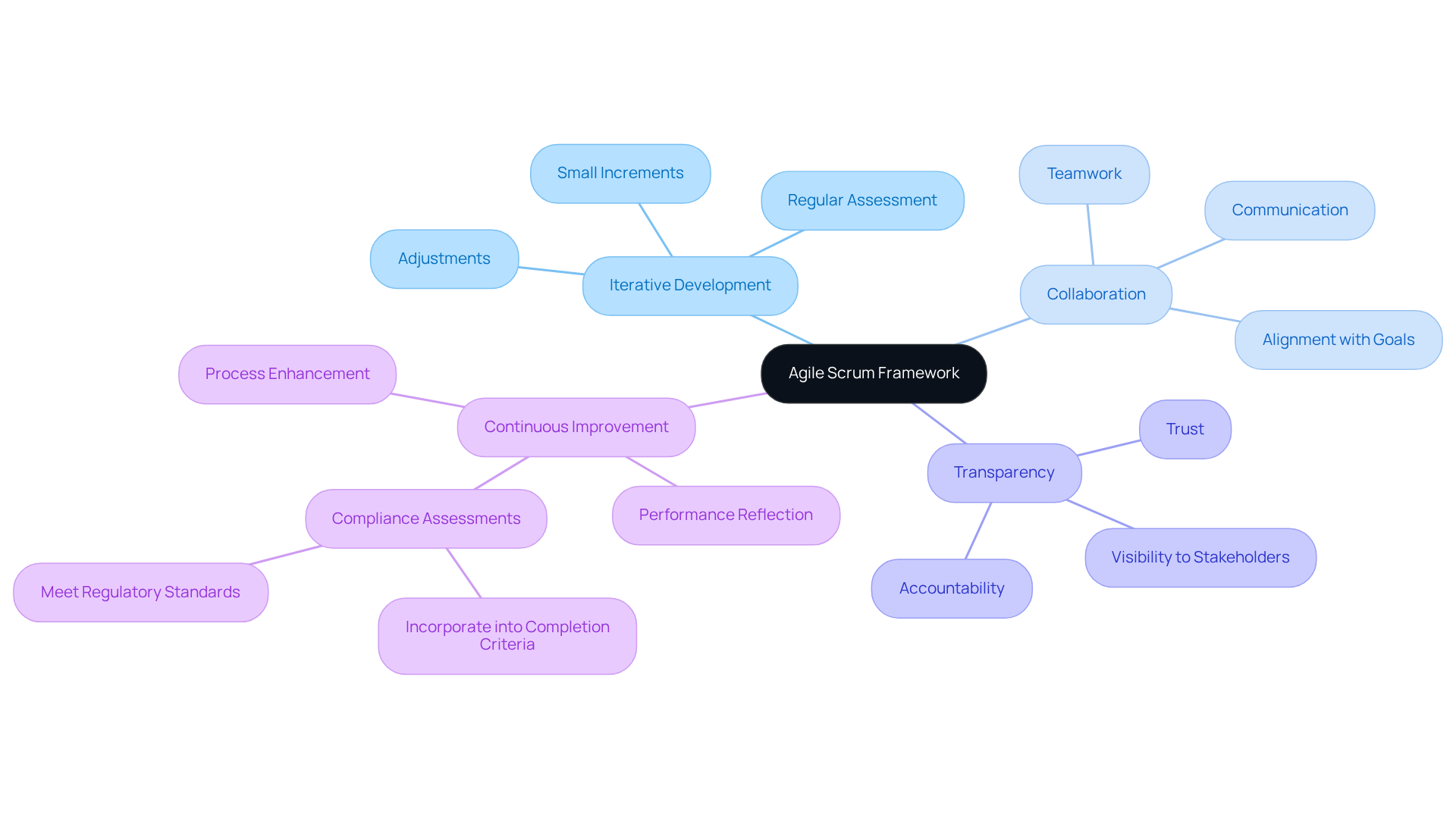
To master the Agile Scrum framework, it is essential to familiarize yourself with its core principles:
- Iterative Development: Work is segmented into small, manageable increments, facilitating regular assessment and adjustments.
- Collaboration: Scrum fosters teamwork and communication among all members, ensuring alignment with project goals.
- Transparency: All project aspects remain visible to stakeholders, promoting trust and accountability.
- Continuous Improvement: Teams routinely reflect on their performance and processes to pinpoint areas for enhancement.
Moreover, organizations must proactively manage regulatory and compliance readiness throughout the Agile development process. For instance, teams can incorporate compliance assessments into the completion criteria for each iteration, guaranteeing that all outputs meet regulatory standards before being considered finished. By integrating compliance considerations into each sprint, teams ensure that their digital offerings not only fulfill functional requirements but also adhere to necessary regulations. This proactive approach mitigates risks and elevates the overall quality and reliability of the product.
Grasping these principles lays a robust foundation for effectively applying the Agile Scrum framework within your team.
Define Roles: Product Owner, Scrum Master, and Development Team
In the agile scrum framework, three pivotal roles are defined, each with distinct responsibilities that contribute to the overall success of Agile projects.
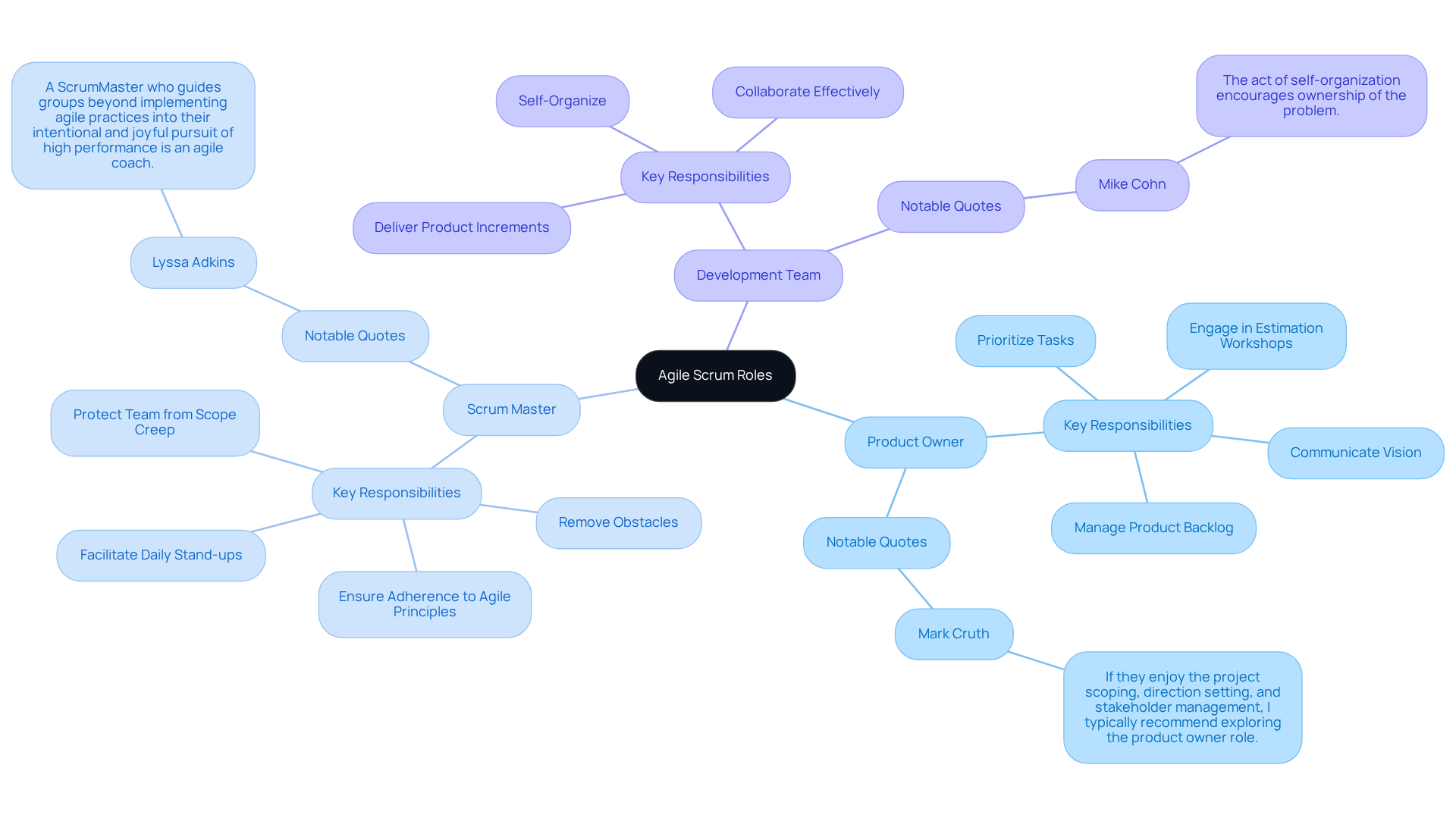
The Product Owner plays a crucial role in maximizing the value of the product by managing the backlog and prioritizing tasks effectively. This position serves as an essential link between stakeholders and the development team, ensuring that the vision is clearly articulated and that the final result aligns with user needs and business objectives. Effective Product Owners engage actively with their teams, dedicating time to estimation workshops and sprint planning to continuously refine item requirements. As Mark Cruth aptly notes, "If they enjoy the project scoping, direction setting, and stakeholder management, I typically recommend exploring the product owner role."
The Agile Facilitator acts as both a facilitator and a coach, guiding the team through the agile scrum framework practices. They are responsible for removing obstacles that hinder progress and ensuring adherence to Agile principles. By fostering a collaborative atmosphere, the Scrum Master encourages open communication and promotes a culture of continuous improvement. Their duties include facilitating daily stand-ups, sprint reviews, and retrospectives, while also protecting the team from over-committing and scope creep during iteration planning meetings. Lyssa Adkins states, "A ScrumMaster who guides groups beyond implementing agile practices into their intentional and joyful pursuit of high performance is an agile coach."
The Development Team, composed of cross-functional professionals, is tasked with delivering product increments. This self-organizing group possesses all the necessary skills to complete their work and is collectively accountable for achieving their goals. Each member contributes to the team's success, emphasizing collaboration and shared ownership of project outcomes.
By clearly defining these roles and their responsibilities within the agile scrum framework, teams can enhance collaboration and efficiency, ultimately leading to more successful project outcomes in 2025. Data indicate that Agile cycles are time-constrained iterations typically lasting 2 to 4 weeks, with facilitators conducting daily stand-ups as needed, which are essential for ensuring team alignment and progress.
Implement Scrum Events: Sprint Planning, Daily Stand-ups, Sprint Review, and Retrospective
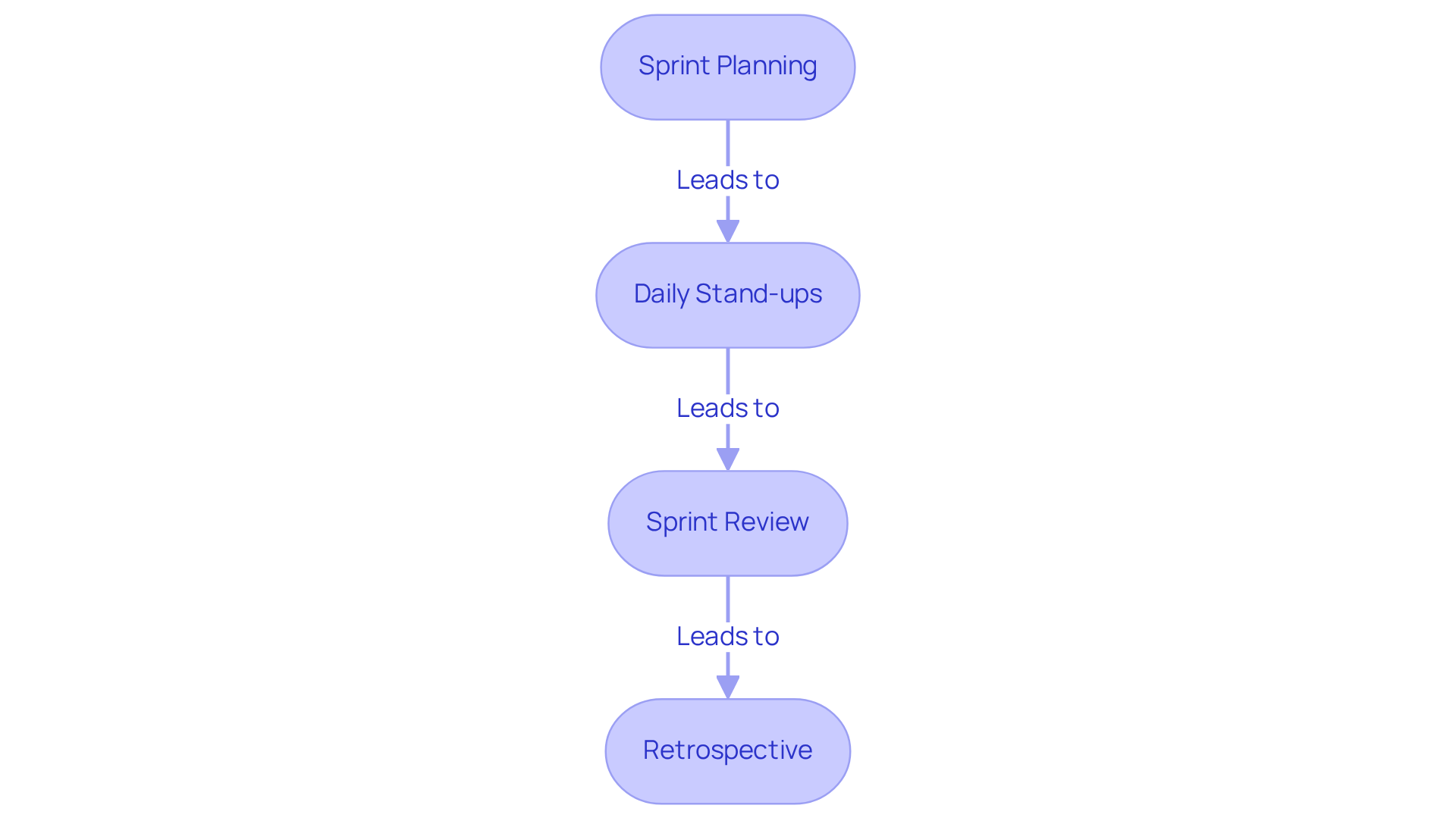
Scrum events are organized gatherings that facilitate efficient planning, execution, and assessment of work within the agile scrum framework. Here’s a comprehensive overview of the key events:
-
Sprint Planning: This event initiates the iteration, where the group collaborates to establish the iteration goal and select items from the product backlog. Clarity in objectives and tasks is essential for alignment and focus.
-
Daily Stand-ups: These brief, time-boxed meetings, typically lasting 15 minutes, occur daily throughout the sprint. Team members share their accomplishments from the previous day, outline their plans for the current day, and identify any obstacles. This practice not only fosters accountability but also enhances problem-solving efficiency. Research indicates that effective Daily Stand-ups can significantly elevate group productivity, with successful Agile teams averaging around 15 minutes for these meetings. Agile coaches emphasize that maintaining a consistent format and encouraging open communication during these stand-ups are best practices that lead to improved group dynamics. As Jake Knapp states, "It’s what work should be about—not wasting time in endless meetings, then seeking camaraderie in a team-building event at a bowling alley—but working together to build something that matters to real people. This is the best use of your time."
-
Sprint Review: At the conclusion of the iteration, the group showcases their completed work to stakeholders. This event serves as a platform for gathering feedback and ensuring that the product aligns with user needs and expectations, thereby facilitating iterative development.
-
Retrospective: Following the sprint review, the group conducts a retrospective to reflect on the successes and challenges of the sprint. This discussion is crucial for identifying areas for improvement and nurturing a culture of continuous enhancement.
By effectively implementing these Scrum events, groups can significantly enhance collaboration within the agile scrum framework, maintain focus, and drive ongoing process improvements. Case studies reveal that organizations utilizing structured Daily Stand-ups report higher performance levels, as these meetings establish a rhythm that keeps groups aligned and engaged. For instance, Savioke's experience with their Relay robot demonstrated how organized Daily Stand-ups aided in validating assumptions and improving group coordination, ultimately enhancing guest experiences.
Utilize Scrum Artifacts: Product Backlog, Sprint Backlog, and Increment
Scrum artifacts serve as essential resources that enhance transparency and enable teams to manage their work effectively. The primary artifacts include:
-
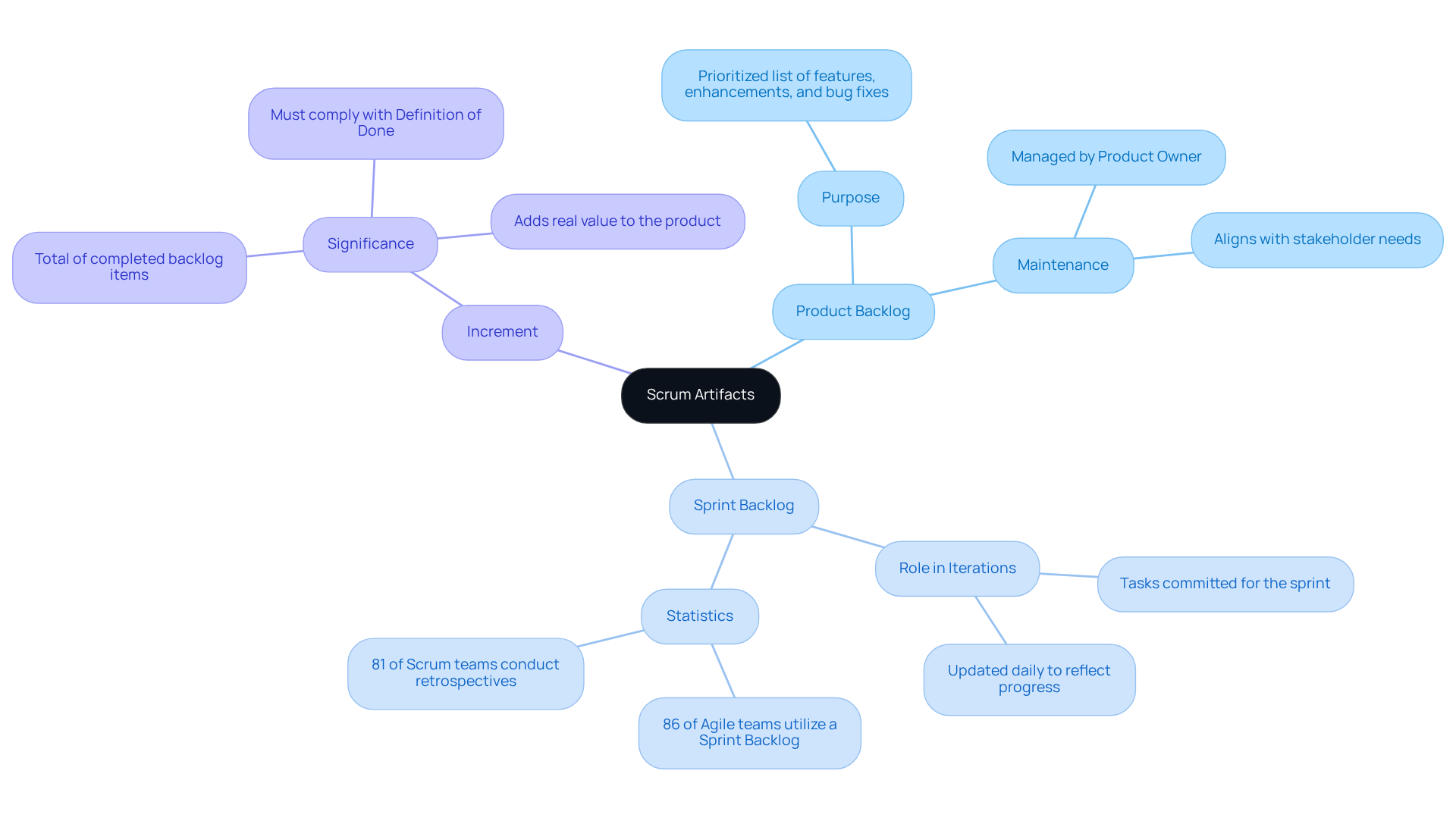
Product Backlog: This prioritized list encompasses features, enhancements, and bug fixes that require attention. The Product Owner is responsible for maintaining the backlog, ensuring it aligns with the current needs and priorities of stakeholders.
-
Sprint Backlog: A crucial component of the product backlog, the Sprint Backlog contains the tasks the team commits to completing during the iteration. It includes all necessary activities to achieve the objective and is updated daily to reflect progress. Notably, 86% of Agile teams utilize a Sprint Backlog, underscoring its importance in effective Agile practices. Additionally, 81% of Scrum teams report conducting a retrospective after each iteration, which highlights the significance of continuous improvement in managing the Sprint Backlog.
-
Increment: The increment represents the total of all completed backlog items at the end of the sprint. It must comply with the Definition of Done, ensuring that it is potentially shippable and adds real value to the product.
Effectively managing these artifacts empowers teams to maintain clarity regarding their progress, prioritize tasks, and consistently deliver value. Agile practitioners emphasize that within the agile scrum framework, maintaining a well-managed Sprint Backlog is crucial for achieving successful outcomes, with 81% of Scrum teams indicating that it significantly enhances their ability to meet sprint objectives. Real-world examples illustrate that organizations prioritizing Sprint Backlog management often experience improved responsiveness and quality, with teams that hold regular retrospectives achieving 24% greater responsiveness. As noted by Zealous System, the focus should remain on helping teams adapt to change without reverting to rigid processes over time. By concentrating on these artifacts, teams can navigate the complexities of the agile scrum framework and achieve meaningful results.
Conclusion
Mastering the Agile Scrum framework is vital for fostering effective team collaboration and driving successful project outcomes. This methodology, grounded in iterative development, underscores the significance of teamwork, transparency, and continuous improvement. It empowers teams to adapt swiftly to changing requirements, consistently delivering valuable product increments.
Key insights illuminate the critical roles within the Scrum framework, including:
- Product Owner
- Scrum Master
- Development Team
Each role contributes uniquely to project success. Furthermore, the structured Scrum events—sprint planning, daily stand-ups, sprint reviews, and retrospectives—along with the management of essential artifacts like the product backlog and sprint backlog, significantly enhance team dynamics. This ensures alignment with stakeholder expectations.
Ultimately, embracing the Agile Scrum framework not only elevates communication and collaboration within teams but also cultivates a culture of accountability and responsiveness. By implementing these practices, organizations can navigate the complexities of project management more effectively, leading to higher quality products and more satisfied stakeholders. Engaging with this framework is a proactive step towards achieving excellence in team collaboration and project delivery.