
AI
our blog
Why Partnering with a Mobile App Development Firm Matters for CTOs

Overview
Partnering with a mobile app development firm is essential for CTOs, as it grants access to specialized expertise, accelerates product innovation, and enhances customer engagement through advanced technologies. Such collaborations not only mitigate the risks associated with in-house development but also pave the way for long-term business success.
By improving operational efficiency and fostering customer loyalty, these partnerships lead to significant performance improvements, as evidenced by companies that have successfully utilized them. Therefore, it is crucial for CTOs to recognize the value of these alliances in driving their organizations forward.
Introduction
In a landscape where digital applications are essential for customer engagement and operational efficiency, the role of Chief Technology Officers (CTOs) is evolving. By partnering with a mobile app development firm, CTOs can harness specialized expertise that not only fosters innovation but also aligns with the latest technological advancements.
Furthermore, as the competitive marketplace intensifies, the question arises: how can these partnerships effectively mitigate the risks associated with in-house development while ensuring long-term success for businesses?
Understand the Strategic Importance of Mobile App Development Partnerships
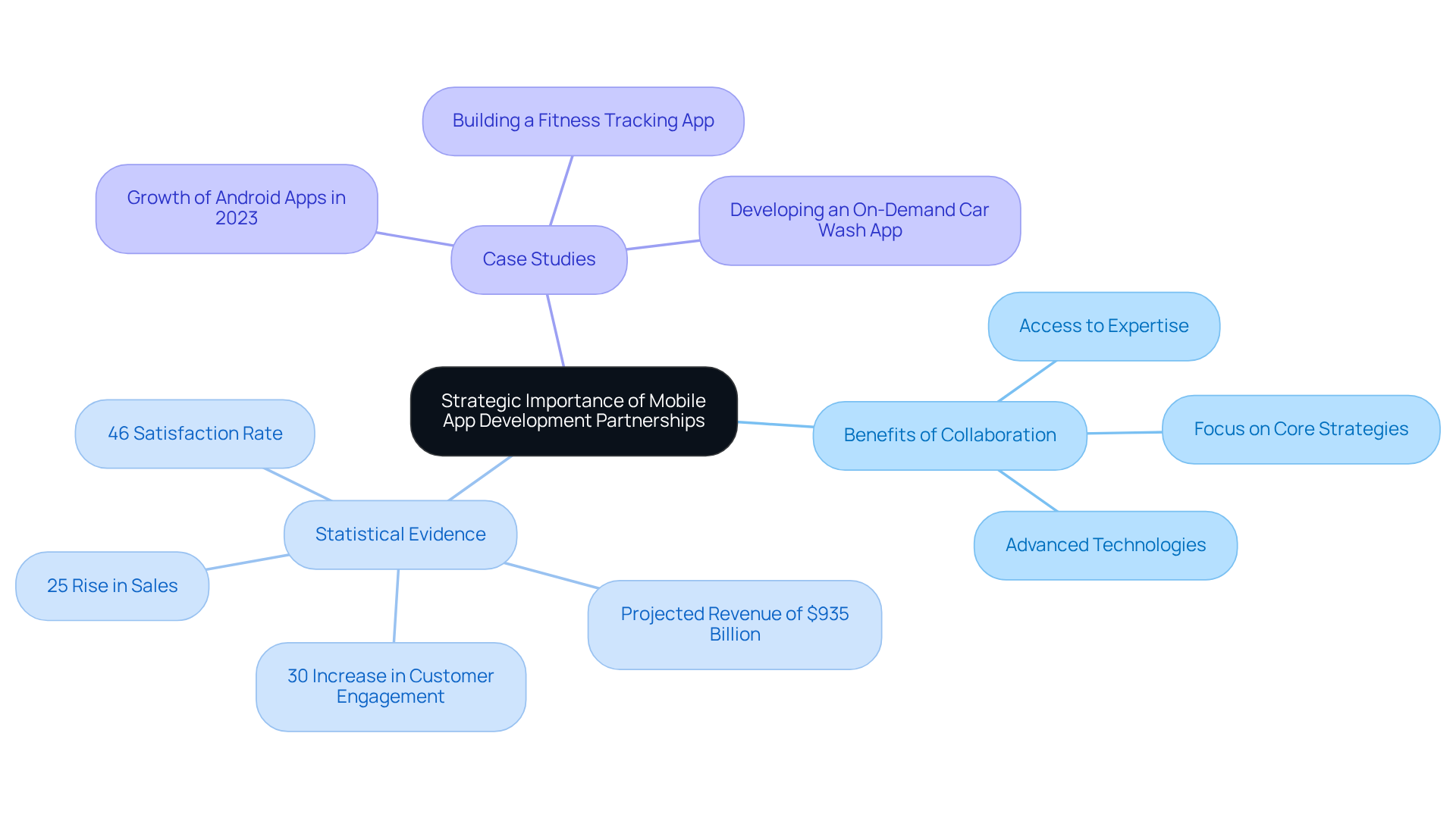
In today's fast-paced digital environment, applications are pivotal in enhancing customer engagement and operational efficiency. For Chief Technology Officers (CTOs), recognizing the strategic significance of partnering with a mobile app development firm is crucial. Collaborating with a mobile app development firm offers access to specialized expertise, ensuring that the developed mobile solutions are not only innovative but also aligned with the latest technological advancements. By partnering with a mobile app development firm, CTOs can concentrate on essential business strategies while leveraging the firm's expertise to drive product innovation.
This strategic alignment is vital in a competitive marketplace, where user experience and functionality heavily influence customer retention and satisfaction. Statistics reveal that 46% of small enterprises that developed an app reported being 'very satisfied' with its performance, underscoring the positive impact of effective app collaboration. For instance, a small retail company that collaborated with an application creation firm witnessed a 30% increase in customer engagement and a 25% rise in sales within six months of launching their app. Furthermore, smartphone applications are projected to generate over $935 billion in revenue in 2023, highlighting their potential to stimulate business growth and the financial incentives for CTOs to engage in such partnerships.
Collaborations with a mobile app development firm also provide access to advanced technologies, including artificial intelligence and machine learning, which enhance app functionalities and user engagement. For example, applications that utilize push notifications can keep users informed about promotions and updates, fostering continuous interaction. Additionally, with 30% of users expecting their favorite app to load within seconds, the necessity of partnering with experts to meet these expectations becomes evident. As businesses endeavor to distinguish themselves, the strategic advantages of these partnerships become increasingly apparent, solidifying their importance for long-term success.
Explore the Key Benefits of Collaborating with Development Experts
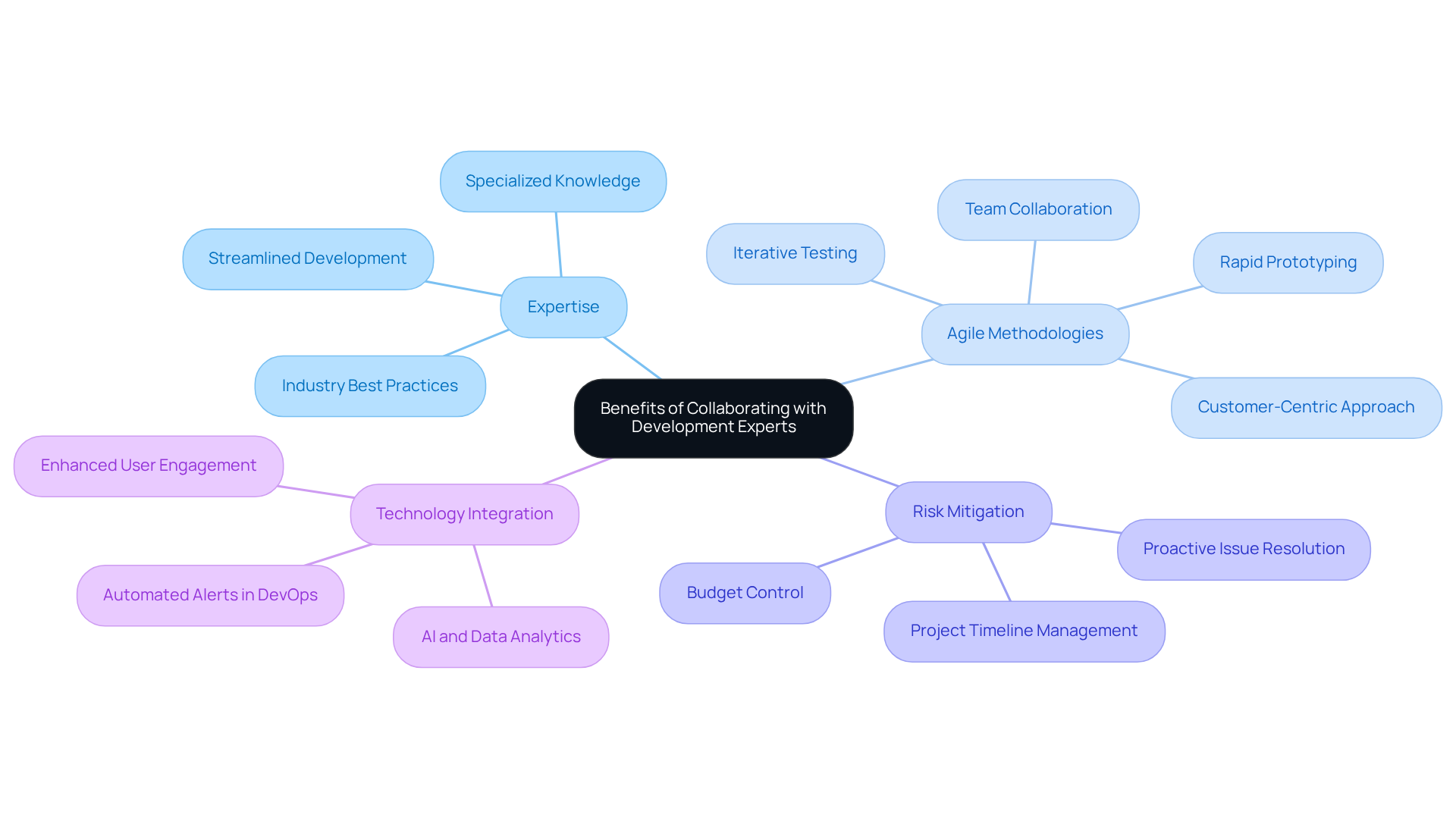
Collaborating with a mobile app development firm presents numerous advantages that can significantly enhance a company's product offerings. These professionals bring substantial experience and specialized knowledge, streamlining the development process and reducing time-to-market for new applications. Their expertise in industry best practices and emerging technologies ensures that the solutions developed are not only functional but also innovative.
A pivotal element of these growth companies is their adoption of agile methodologies, which promote iterative testing and feedback. This strategy results in a more polished final product, enabling rapid prototyping and testing of ideas, thereby ensuring that the end product resonates with users. Agile practices cultivate an environment of teamwork and adaptability, allowing teams to respond swiftly to changes and prioritize customer feedback at every stage of development.
Moreover, collaborating with specialists enables CTOs at a mobile app development firm to effectively mitigate risks associated with app creation, such as budget overruns and project delays. This strategic partnership ultimately leads to more successful project outcomes. The integration of automated alerts within DevOps is crucial for ensuring timely interventions, minimizing potential irreversible damage, and enhancing collaboration among teams. This proactive approach empowers teams to swiftly address issues as they arise, further boosting project efficiency.
The incorporation of AI and data analytics into the development process enhances user engagement by providing valuable insights that inform design decisions and improve overall app performance. In this dynamic landscape, leveraging expert collaboration is essential for achieving excellence in app creation.
Identify the Risks of In-House Mobile App Development
In-house application creation may initially appear to be a viable choice for organizations; however, it carries significant risks that can jeopardize project success. A primary concern is resource constraints. Many companies lack the necessary talent or expertise that a mobile app development firm offers to develop complex mobile applications, particularly those leveraging advanced technologies like AI. This deficiency can result in subpar product quality, prolonged timelines, and ultimately, inflated costs. Furthermore, in-house teams often find themselves stretched thin, managing multiple projects concurrently, which can dilute their focus and attention to detail.
The fast-evolving technological landscape complicates matters further, as in-house teams may struggle to stay abreast of the latest trends and best practices. This can lead to outdated solutions that fail to meet user expectations. Additionally, the risk of burnout among team members is a pressing issue; the pressure to deliver high-quality products under tight deadlines can diminish morale and productivity.
For instance, Crowleys DFK, a leading Chartered Accounting firm in Ireland with 160 staff members and 46 years of service, faced challenges in securing a remote working environment during the Covid-19 pandemic. They engaged CWSI, recognized as Ireland’s most experienced modern workplace security and compliance specialist, to enhance their information security management and optimize their use of Microsoft Office365. CWSI was tasked with deploying Unified Identity Management to protect company data, demonstrating the value of specialized expertise in overcoming in-house limitations. By acknowledging these risks, CTOs can better understand the benefits of partnering with a mobile app development firm that offers essential expertise and resources to ensure successful project outcomes, such as attaining ISO 27001 compliance.

Evaluate the Long-Term Impact of Effective Mobile App Development
The long-term effect of efficient application creation extends well beyond the initial launch. A meticulously crafted mobile app serves as a vital touchpoint for customer engagement, fostering loyalty and driving repeat business. For instance, Studio Graphene's innovative design of the OrderPay app exemplifies how seamless ordering and payment solutions can enhance dining experiences. This enables individuals to browse menus, place orders, and pay directly from their tables through features like table service, order & collect, and self-serve options. Investing in high-quality advancements allows organizations to develop applications that not only meet audience needs but also adapt to the constantly shifting market environment, particularly in light of the accelerated delivery demands imposed by the COVID-19 pandemic. This adaptability is crucial in an era where consumer preferences are in constant flux.
Furthermore, effective application development can yield substantial cost savings over time. By adhering to best practices and leveraging advanced technologies, companies can significantly reduce maintenance costs while enhancing operational efficiency. The combination of AI and data analytics, as demonstrated in the OrderPay case, provides invaluable insights into consumer behavior, enabling organizations to make informed, data-driven decisions that enhance app functionality and user experience.
Statistics reveal that increasing customer retention rates by just 5% can boost profits by 25% to 95%, underscoring the financial impact of loyalty efforts. Additionally, loyal customers are 64% more likely to purchase more frequently, and 31% are more willing to pay a higher price, further highlighting the benefits of fostering customer loyalty. However, only around 10% of applications sustain user engagement and revenue beyond the first three months, as noted in the case study 'Success Rate in App Development,' which emphasizes the challenges in achieving long-term success. This reinforces the importance of ongoing enhancement and strategic planning in application creation.
Ultimately, the long-term advantages of efficient application creation underscore the significance of strategic collaborations. Partnering with a mobile app development firm like Studio Graphene enables organizations to tap into external expertise and resources, ensuring sustained success in a competitive marketplace. As highlighted in the case study 'Trust and Repeat Purchases,' trust is built through transparency, consistent quality, and excellent service, fostering long-term relationships and driving business growth.

Conclusion
Recognizing the strategic importance of partnering with a mobile app development firm is essential for Chief Technology Officers (CTOs) aiming to enhance their organization's digital capabilities. Collaborating with experts not only provides access to specialized knowledge but also allows CTOs to concentrate on core business strategies while driving innovation through advanced mobile solutions.
This article underscores several key benefits of these partnerships, including:
- Improved product quality
- Faster time-to-market
- Enhanced user engagement through the integration of cutting-edge technologies like AI and machine learning
By leveraging the expertise of mobile app development firms, organizations can effectively mitigate risks associated with in-house development, such as resource constraints and the potential for burnout among team members. The long-term impact of effective app development is evident in:
- Increased customer loyalty
- Reduced operational costs
- The capacity to adapt to ever-changing market demands
Ultimately, the significance of strategic collaborations in mobile app development cannot be overstated. As businesses navigate the complexities of digital transformation, forging partnerships with mobile app development experts is a crucial step toward achieving sustained success and growth. Embracing this approach not only enhances the quality of mobile applications but also positions organizations to thrive in a competitive landscape.