
AI
Insights
How Long Does It Take to Develop an App? Key Factors Explained
Overview
The duration required to develop an app can vary significantly, influenced by factors such as complexity, team expertise, and design requirements. Typically, this timeline ranges from 2 to 12 months. Understanding these factors is crucial for businesses; it enables them to allocate resources effectively and manage expectations throughout the app development process. By grasping the intricacies involved, organizations can better navigate the challenges and optimize their project outcomes.
Introduction
Understanding the timeline for app development is crucial for businesses aiming to navigate the complexities of creating a successful mobile application. Various factors influence the duration—from the app's complexity and team expertise to design requirements and testing protocols. Stakeholders must grasp the nuances that dictate how long it truly takes to bring an app to life.
Yet, amidst these variables, common misconceptions persist, leading to unrealistic expectations and potential project delays.
How can businesses effectively manage these timelines and align their strategies with the realities of app development?
Defining App Development Timeframes
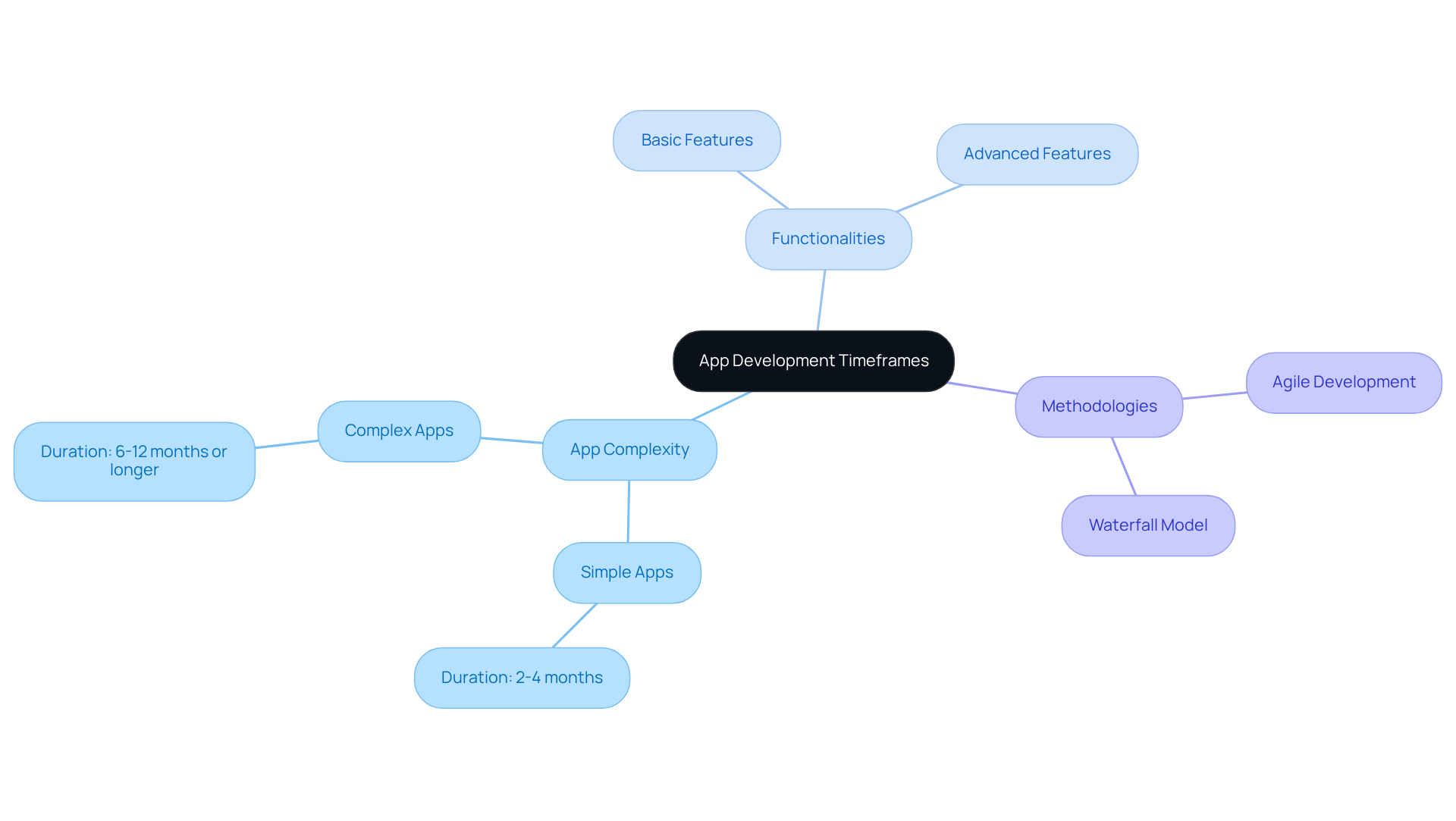
App creation timeframes indicate how long it takes to develop an app, which includes the duration necessary to design, develop, test, and launch a mobile application. When considering how long it takes to develop an app, the timeframe can vary significantly based on several factors, including:
Typically, how long does it take to develop an app? Simple applications may take between 2 to 4 months, whereas more intricate applications can require 6 to 12 months or even longer. Understanding these timeframes is crucial for businesses, as it enables them to allocate resources effectively and manage expectations with precision.
Factors Influencing App Development Duration
Several key factors significantly influence how long it takes to develop an app. First, consider the app complexity. More intricate applications, particularly those featuring advanced functionalities, integrations, and custom designs, often lead to inquiries about how long does it take to develop an app. For example, an application that incorporates sophisticated AI capabilities will demand more time than a basic utility app. Additionally, ensuring regulatory and compliance readiness can introduce layers of complexity, which raises the question of how long does it take to develop an app, necessitating thorough assessments and adjustments throughout the creation process.
Next, the team expertise plays a crucial role. The experience and skill level of the development team can dramatically affect how long it takes to develop an app. A seasoned team is likely to navigate challenges more efficiently than a less experienced one, particularly in proactively managing compliance requirements.
Moreover, the design requirements cannot be overlooked. The complexity of the user interface (UI) and user experience (UX) design can also impact the time needed for completion. Custom designs often require more iterations and testing, which raises the question of how long does it take to develop an app that aligns with regulatory standards.
Furthermore, testing and quality assurance are essential phases in the development process. Rigorous testing is crucial to understand how long does it take to develop an app that functions correctly across various devices and platforms. This phase can substantially add to the overall creation time, especially when compliance checks are integrated into the testing protocols.
Finally, consider project scope changes. Any alterations in project scope during development can lead to significant delays. Effective change management is crucial to minimize disruptions, particularly when new compliance requirements arise that necessitate adjustments to the project scope.

Stages of the App Development Process
The app development process typically consists of several key stages that are crucial for success, which raises the question of how long does it take to develop an app.

Common Misconceptions About Development Timelines
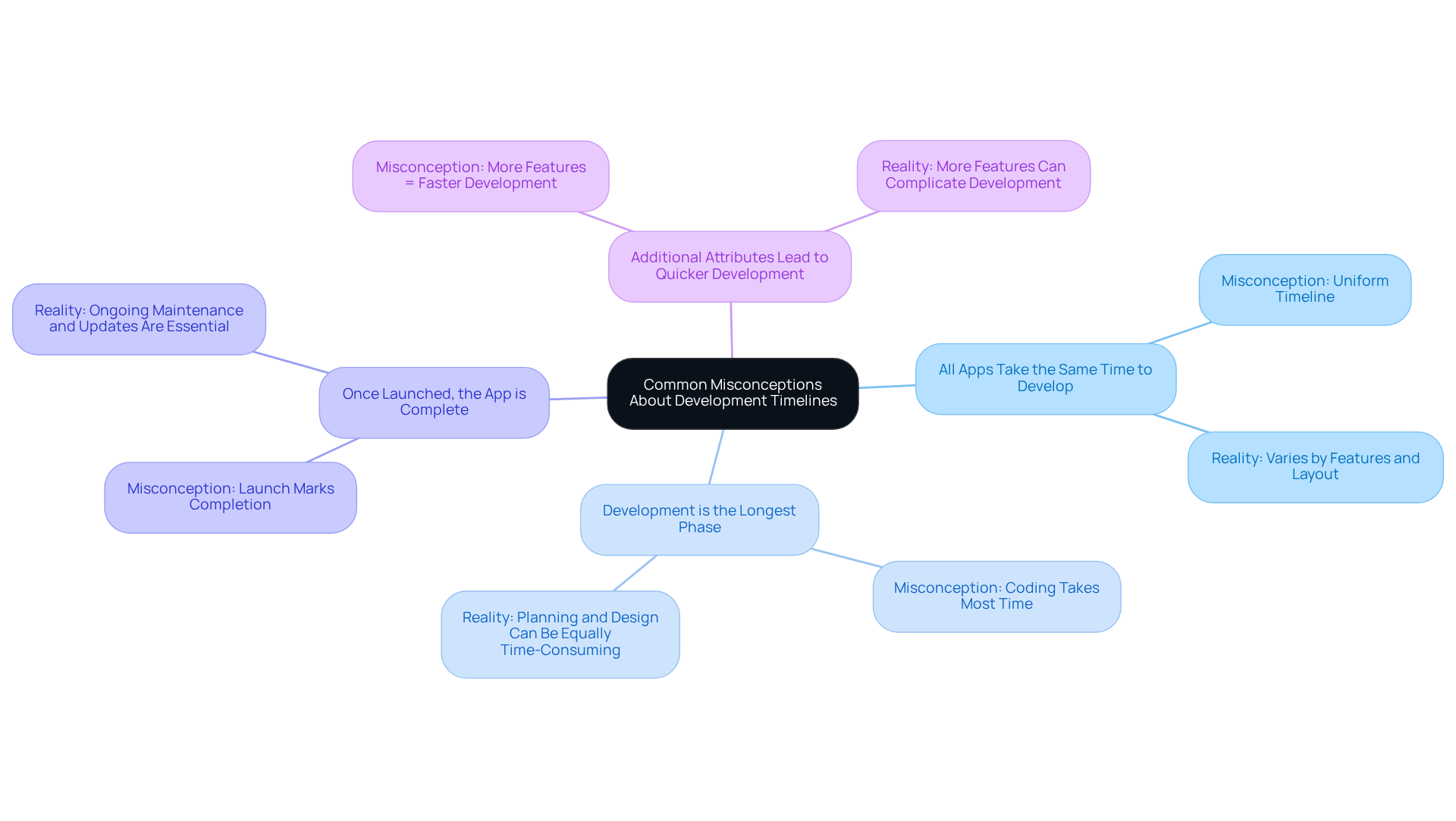
Several misconceptions about how long does it take to develop an app can significantly mislead stakeholders.
Understanding these misconceptions is crucial for effective project management and for determining how long does it take to develop an app while setting realistic expectations.
Conclusion
Understanding the timeframe for app development is crucial for businesses aiming to effectively allocate resources and manage expectations. The duration to create an app is influenced by various factors, including its complexity, the expertise of the development team, design requirements, and the thoroughness of testing. By grasping these elements, stakeholders can better anticipate the time needed to bring their app ideas to fruition.
Key arguments highlighted in the article include:
Each phase, from planning and design to coding and testing, plays a vital role in determining the overall timeline. Furthermore, common misconceptions about app development durations, such as the belief that all apps take the same time or that development ends at launch, can mislead stakeholders and lead to unrealistic expectations.
Ultimately, recognizing the intricacies of app development timelines is essential for successful project management. By dispelling myths and understanding the various factors at play, businesses can set realistic goals and prepare for the ongoing nature of app maintenance and updates. Embracing this comprehensive perspective will not only enhance project outcomes but also pave the way for innovative app solutions that meet user needs effectively.
{"@context": "https://schema.org", "@type": "FAQPage", "mainEntity": [{"@type": "Question", "name": "What are app development timeframes?", "acceptedAnswer": {"@type": "Answer", "text": "App development timeframes indicate how long it takes to design, develop, test, and launch a mobile application."}}, {"@type": "Question", "name": "What factors influence the time it takes to develop an app?", "acceptedAnswer": {"@type": "Answer", "text": "The time to develop an app can vary based on the app's complexity, the functionalities incorporated, and the methodologies employed."}}, {"@type": "Question", "name": "How long does it typically take to develop a simple app?", "acceptedAnswer": {"@type": "Answer", "text": "Simple applications may take between 2 to 4 months to develop."}}, {"@type": "Question", "name": "How long does it typically take to develop a more complex app?", "acceptedAnswer": {"@type": "Answer", "text": "More intricate applications can require 6 to 12 months or even longer to develop."}}, {"@type": "Question", "name": "Why is it important to understand app development timeframes?", "acceptedAnswer": {"@type": "Answer", "text": "Understanding these timeframes is crucial for businesses as it helps them allocate resources effectively and manage expectations with precision."}}]}{"@context": "https://schema.org", "@type": "BlogPosting", "headline": "How Long Does It Take to Develop an App? Key Factors Explained", "description": "Discover the factors influencing how long it takes to develop an app and typical timeframes.", "datePublished": "2025-07-07T00:00:03.463000", "image": ["https://cdn.prod.website-files.com/5fc90bae06ffc6ed06fd0e3c/686b134485311a51b6a9cedc_goqleofg-in-this-mindmap-the-center-represents-the-main-topic-app-development-timeframes-each-branch-highlights-key-factors-affecting-the-time-it-takes-to-develop-an-app-while-the-additional-branch-shows-the-typical-durations-for-simple-versus-complex-applications.webp", "https://cdn.prod.website-files.com/5fc90bae06ffc6ed06fd0e3c/686b134485311a51b6a9cedf_tdaqkyny-at-the-center-is-the-main-topic-of-app-development-duration-with-branches-representing-key-influencing-factors-each-branch-can-be-explored-further-to-see-specific-details-that-contribute-to-the-overall-timeline.webp", "https://cdn.prod.website-files.com/5fc90bae06ffc6ed06fd0e3c/686b134485311a51b6a9cee2_luiewgju-each-box-represents-a-key-stage-in-developing-an-app-with-arrows-showing-how-you-move-from-one-stage-to-the-next-the-time-indicated-in-parentheses-shows-how-long-each-stage-typically-takes.webp", "https://cdn.prod.website-files.com/5fc90bae06ffc6ed06fd0e3c/686b134485311a51b6a9cee5_ufoovror-each-branch-represents-a-misconception-about-app-development-timelines-follow-each-one-to-understand-the-misunderstanding-better-and-how-it-relates-to-the-overall-timeline.webp"], "articleBody": "## Overview\nThe duration required to develop an app can vary significantly, influenced by factors such as complexity, team expertise, and design requirements. Typically, this timeline ranges from 2 to 12 months. Understanding these factors is crucial for businesses; it enables them to allocate resources effectively and manage expectations throughout the app development process. By grasping the intricacies involved, organizations can better navigate the challenges and optimize their project outcomes.\n\n## Introduction\nUnderstanding the timeline for app development is crucial for businesses aiming to navigate the complexities of creating a successful mobile application. Various factors influence the duration\u2014from the app's complexity and team expertise to design requirements and testing protocols. Stakeholders must grasp the nuances that dictate how long it truly takes to bring an app to life. \n\nYet, amidst these variables, common misconceptions persist, leading to unrealistic expectations and potential project delays. \n\nHow can businesses effectively manage these timelines and align their strategies with the realities of app development?\n\n## Defining App Development Timeframes\nApp creation timeframes indicate how long it takes to develop an app, which includes the duration necessary to design, develop, test, and launch a mobile application. When considering how long it takes to develop an app, the timeframe can vary significantly based on several factors, including:\n\n1. The app's complexity\n2. The functionalities incorporated\n3. The methodologies employed\n\nTypically, how long does it take to develop an app? Simple applications may take between 2 to 4 months, whereas more intricate applications can require 6 to 12 months or even longer. Understanding these timeframes is crucial for businesses, as it enables them to allocate resources effectively and manage expectations with precision.\n\n\n## Factors Influencing App Development Duration\nSeveral key factors significantly influence how long it takes to develop an app. First, consider the **app complexity**. More intricate applications, particularly those featuring advanced functionalities, integrations, and custom designs, often lead to inquiries about how long does it take to develop an app. For example, an application that incorporates sophisticated AI capabilities will demand more time than a basic utility app. Additionally, ensuring regulatory and compliance readiness can introduce layers of complexity, which raises the question of how long does it take to develop an app, necessitating thorough assessments and adjustments throughout the creation process. \n\nNext, the **team expertise** plays a crucial role. The experience and skill level of the [development team](https://studiographene.com/about) can dramatically affect how long it takes to develop an app. A seasoned team is likely to navigate challenges more efficiently than a less experienced one, particularly in proactively managing compliance requirements. \n\nMoreover, the **design requirements** cannot be overlooked. The complexity of the user interface (UI) and user experience (UX) design can also impact the time needed for completion. Custom designs often require more iterations and testing, which raises the question of how long does it take to develop an app that aligns with regulatory standards. \n\nFurthermore, **testing and quality assurance** are essential phases in the development process. Rigorous testing is crucial to understand how long does it take to develop an app that functions correctly across various devices and platforms. This phase can substantially add to the overall creation time, especially when compliance checks are integrated into the testing protocols. \n\nFinally, consider **project scope changes**. Any alterations in project scope during development can lead to significant delays. Effective change management is crucial to minimize disruptions, particularly when new compliance requirements arise that necessitate adjustments to the project scope.\n\n\n## Stages of the App Development Process\nThe app development process typically consists of several key stages that are crucial for success, which raises the question of how long does it take to develop an app.\n\n1. **Planning and Research** is the initial phase, where the app's purpose, target audience, and essential elements are defined. This foundational stage usually takes 2 to 4 weeks, which is important for understanding how long does it take to develop an app and sets the groundwork for subsequent phases.\n\n2. Next is **Design and Prototyping**. During this stage, wireframes and prototypes are created to visualize the app's layout and functionality. This process can take 3 to 6 weeks, which relates to [how long does it take to develop an app](https://studiographene.com), allowing for adjustments based on feedback and ensuring a user-centered design.\n\n3. Following design, we enter the **Development and Coding** phase. Here, the actual coding of the app occurs, often making this the most time-consuming stage, leading to the question of how long does it take to develop an app, which can span 4 to 8 months depending on the complexity of the app. This is where the vision begins to take shape into a functional product.\n\n4. After development, the **Testing and Quality Assurance** stage ensures that the app is free of bugs and performs well across different devices. This phase, which typically lasts 4 to 6 weeks, is critical for understanding how long does it take to develop an app that delivers a reliable user experience.\n\n5. Finally, we reach **Deployment**. In this concluding stage, the app is launched on app stores, which raises the question of how long does it take to develop an app, as it may take an additional 2 to 4 weeks for approval and distribution. This marks the transition from development to market, allowing users to engage with the app.\n\n\n## Common Misconceptions About Development Timelines\nSeveral misconceptions about how long does it take to develop an app can significantly mislead stakeholders.\n\n- **All Apps Take the Same Time to Develop**: A common belief is that all apps, regardless of their complexity, adhere to a uniform timeline. In reality, how long does it take to develop an app varies considerably based on the specific features and layout of the app.\n\n- **Development is the Longest Phase**: While coding is undeniably time-consuming, it is essential to recognize that the planning and design phases can consume just as much time, if not more, particularly for complex projects.\n\n- **Once Launched, the App is Complete**: Many stakeholders mistakenly assume that the app creation process concludes with its launch. However, ongoing maintenance, regular updates, and the integration of user feedback are vital for ensuring long-term success.\n\n- **Additional Attributes Lead to Quicker Development**: Some stakeholders may believe that adding more features will expedite the development process. In fact, incorporating additional elements can complicate the development and significantly extend timelines.\n\nUnderstanding these misconceptions is crucial for [effective project management](https://studiographene.com/about) and for determining how long does it take to develop an app while setting realistic expectations.\n\n\n\n## Conclusion\nUnderstanding the timeframe for app development is crucial for businesses aiming to effectively allocate resources and manage expectations. The duration to create an app is influenced by various factors, including its complexity, the expertise of the development team, design requirements, and the thoroughness of testing. By grasping these elements, stakeholders can better anticipate the time needed to bring their app ideas to fruition.\n\nKey arguments highlighted in the article include:\n\n- The significant impact of app complexity on development time\n- The importance of a skilled development team\n- The essential stages of the app development process\n\nEach phase, from planning and design to coding and testing, plays a vital role in determining the overall timeline. Furthermore, common misconceptions about app development durations, such as the belief that all apps take the same time or that development ends at launch, can mislead stakeholders and lead to unrealistic expectations.\n\nUltimately, recognizing the intricacies of app development timelines is essential for successful project management. By dispelling myths and understanding the various factors at play, businesses can set realistic goals and prepare for the ongoing nature of app maintenance and updates. Embracing this comprehensive perspective will not only enhance project outcomes but also pave the way for innovative app solutions that meet user needs effectively.\n\n::iframe[https://iframe.tely.ai/cta/eyJhcnRpY2xlX2lkIjogIjY4NmIwZTAzZTFlYzgyNTQ2MDU5ZGM2NyIsICJjb21wYW55X2lkIjogIjY3YzVkZmRhMjY3MzljNjRhMWVjYjdiYSIsICJpbmRleCI6IG51bGwsICJ0eXBlIjogImFydGljbGUifQ==]{width=\"100%\" height=\"300px\"}"}