
AI
Insights
Master Blockchain Development: A Step-by-Step Guide for CTOs

Overview
The article "Master Blockchain Development: A Step-by-Step Guide for CTOs" serves as a comprehensive roadmap for Chief Technology Officers (CTOs) aiming to lead blockchain development initiatives effectively. It begins by identifying the challenge faced by CTOs in navigating the complex landscape of blockchain technology. Essential blockchain fundamentals, necessary programming skills, and a structured learning path are outlined, providing a solid foundation for success. Furthermore, the article highlights valuable tools and resources that are crucial for project execution and team guidance. A thorough understanding of these elements is not merely beneficial; it is imperative for thriving in the rapidly evolving blockchain environment. This guide empowers CTOs with the insights needed to drive their organizations forward in this transformative field.
Introduction
In an era where digital innovation is reshaping industries, blockchain technology emerges as a transformative force. For Chief Technology Officers (CTOs) striving to harness this potential, mastering blockchain development is not merely an option; it is essential. This guide presents a comprehensive roadmap, detailing the essential skills, programming languages, and effective tools necessary to navigate the complexities of blockchain. As the landscape evolves at an unprecedented pace, the pressing question remains: how can CTOs ensure their teams are not only equipped with knowledge but also prepared to confront the unique challenges posed by this dynamic field?
Understand Blockchain Fundamentals
To embark on your journey into blockchain development, it is essential to familiarize yourself with several key concepts that are foundational to this technology.
By mastering these fundamentals, you will establish a robust foundation for your journey in blockchain development and distributed ledger technology.

Learn Essential Skills and Programming Languages
To effectively develop blockchain applications, it is essential to focus on the following key skills and programming languages:
By refining these skills, you will be well-equipped to guide your team in the dynamic area of blockchain development, ensuring your projects are innovative, secure, and aligned with industry standards.

Follow a Step-by-Step Path to Becoming a Blockchain Developer
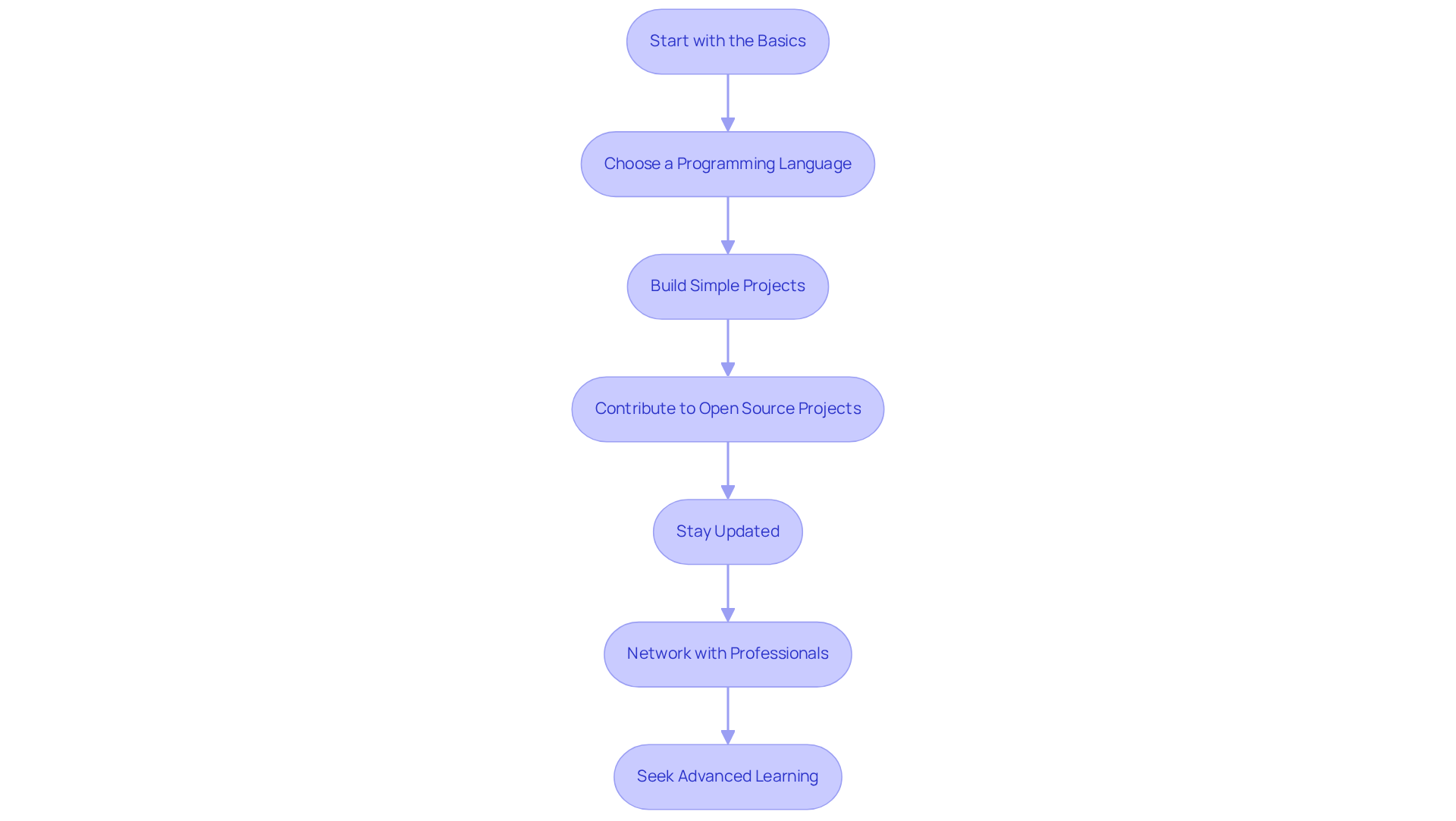
To become a proficient blockchain developer, it is essential to follow a structured approach:
The typical duration to acquire skills in distributed ledger technology is anticipated to be approximately 10 to 17 hours for foundational courses, making it attainable for individuals dedicated to improving their proficiency. Furthermore, distributed ledger engineers receive attractive salaries ranging from $92,050 to $111,845 annually, providing additional incentive for CTOs to motivate their teams to engage in related projects. By adhering to this organized route, you will progressively enhance your skills in blockchain development, preparing yourself for success in this rapidly evolving domain.
Utilize Tools and Resources for Effective Development
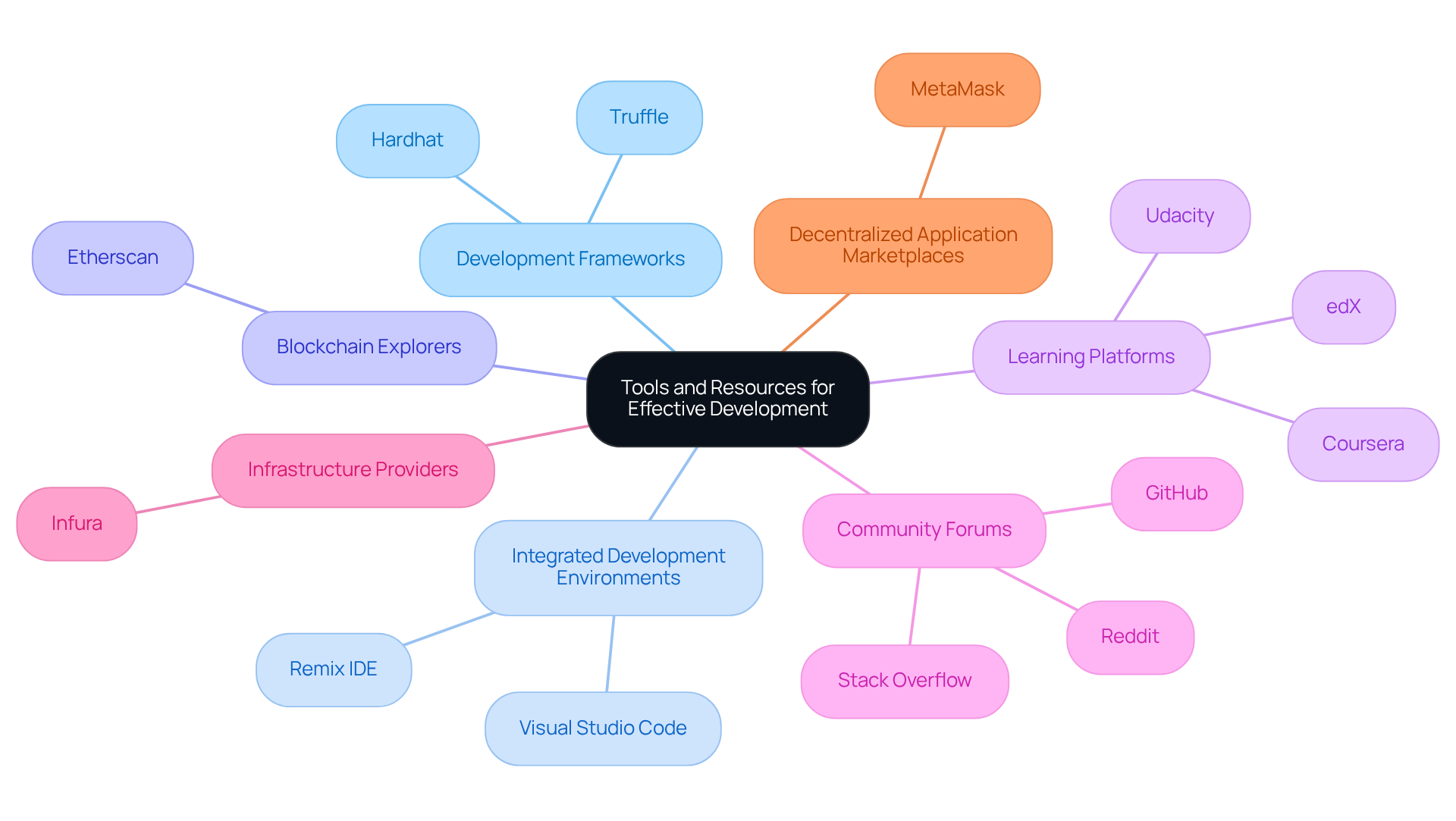
To enhance your blockchain development process, consider the following tools and resources:
By leveraging these tools and resources, you can significantly enhance your efficiency and effectiveness, positioning your blockchain development projects for success in an increasingly competitive landscape.
Conclusion
Mastering blockchain development is an essential pursuit for CTOs seeking to harness the transformative power of this technology. This guide presents a structured approach designed to equip leaders and their teams with the critical knowledge and skills necessary to navigate the complexities of blockchain. By grasping foundational concepts, programming languages, and development tools, CTOs can drive innovation and secure their organizations' competitive edge in a rapidly evolving landscape.
The article underscores the significance of understanding blockchain fundamentals, including:
It also emphasizes the importance of mastering programming languages such as:
Alongside the critical nature of cryptographic principles and data structures. Following a step-by-step pathway to becoming a proficient developer—ranging from building simple projects to engaging with the community—provides a clear roadmap for success. Additionally, employing the right tools and resources can significantly enhance development efficiency and effectiveness.
As blockchain technology continues to reshape industries, the imperative is evident: CTOs must prioritize the development of their teams' capabilities in this domain. By fostering a culture of continuous learning and adaptation, organizations can not only keep pace with current trends but also position themselves as leaders in the blockchain revolution. Embracing this journey will unlock new opportunities and drive innovation, ensuring that teams are well-prepared to confront the challenges and possibilities that lie ahead.
{"@context": "https://schema.org", "@type": "FAQPage", "mainEntity": [{"@type": "Question", "name": "What is a distributed ledger in blockchain technology?", "acceptedAnswer": {"@type": "Answer", "text": "A distributed ledger is a decentralized, shared record that logs transactions across multiple computers. Each block in the ledger contains a cryptographic hash of the previous block, a timestamp, and relevant transaction data."}}, {"@type": "Question", "name": "What are consensus mechanisms in blockchain?", "acceptedAnswer": {"@type": "Answer", "text": "Consensus mechanisms, such as Proof of Work (PoW) and Proof of Stake (PoS), are algorithms that validate transactions and ensure the integrity of the distributed ledger."}}, {"@type": "Question", "name": "What are smart contracts in the context of blockchain?", "acceptedAnswer": {"@type": "Answer", "text": "Smart contracts are self-executing contracts with terms directly written in code. They automate processes, reducing the need for intermediaries and streamlining operations."}}, {"@type": "Question", "name": "Why is decentralization important in blockchain technology?", "acceptedAnswer": {"@type": "Answer", "text": "Decentralization enhances security and reduces the risks associated with single points of failure, making the system more resilient."}}, {"@type": "Question", "name": "How does cryptography relate to blockchain?", "acceptedAnswer": {"@type": "Answer", "text": "Cryptography is essential in blockchain as it secures transactions and governs the creation of new blocks, ensuring the integrity and confidentiality of the data."}}, {"@type": "Question", "name": "Why is it important to understand these blockchain fundamentals?", "acceptedAnswer": {"@type": "Answer", "text": "Mastering these fundamentals provides a robust foundation for anyone looking to embark on a journey in blockchain development and distributed ledger technology."}}]}{"@context": "https://schema.org", "@type": "BlogPosting", "headline": "Master Blockchain Development: A Step-by-Step Guide for CTOs", "description": "Master blockchain development with essential skills, tools, and a step-by-step guide for success.", "datePublished": "2025-09-05T00:00:18.534000", "image": ["https://cdn.prod.website-files.com/5fc90bae06ffc6ed06fd0e3c/68ba2da5b82c0237598bd110_lxcgsdws-the-central-node-represents-the-main-theme-of-blockchain-fundamentals-each-branch-outlines-a-key-concept-helping-you-visualize-how-these-ideas-connect-and-contribute-to-your-understanding-of-blockchain-technology.webp", "https://cdn.prod.website-files.com/5fc90bae06ffc6ed06fd0e3c/68ba2da5b82c0237598bd10a_ruicdgsf-at-the-center-is-the-main-topic-of-essential-skills-and-programming-languages-each-branch-represents-a-category-with-further-subdivisions-for-specific-languages-and-skills-helping-you-understand-how-they-relate-to-blockchain-development.webp", "https://cdn.prod.website-files.com/5fc90bae06ffc6ed06fd0e3c/68ba2da5b82c0237598bd10d_bqfboekx-628920-ec-7-b-8-d-48-ea-aca-7-b-511-ccf-2343-b.webp", "https://cdn.prod.website-files.com/5fc90bae06ffc6ed06fd0e3c/68ba2da5b82c0237598bd116_cofctiox-the-central-node-represents-the-overall-theme-each-branch-leads-to-different-categories-of-tools-and-resources-and-further-branches-show-specific-items-within-those-categories-the-colors-help-differentiate-between-the-categories-for-easier-navigation.webp"], "articleBody": "## Overview\nThe article \"Master Blockchain Development: A Step-by-Step Guide for CTOs\" serves as a comprehensive roadmap for Chief Technology Officers (CTOs) aiming to lead blockchain development initiatives effectively. It begins by identifying the challenge faced by CTOs in navigating the complex landscape of blockchain technology. Essential blockchain fundamentals, necessary programming skills, and a structured learning path are outlined, providing a solid foundation for success. Furthermore, the article highlights valuable tools and resources that are crucial for project execution and team guidance. A thorough understanding of these elements is not merely beneficial; it is imperative for thriving in the rapidly evolving blockchain environment. This guide empowers CTOs with the insights needed to drive their organizations forward in this transformative field.\n\n## Introduction\nIn an era where digital innovation is reshaping industries, blockchain technology emerges as a transformative force. For Chief Technology Officers (CTOs) striving to harness this potential, mastering blockchain development is not merely an option; it is essential. This guide presents a comprehensive roadmap, detailing the essential skills, programming languages, and effective tools necessary to navigate the complexities of blockchain. As the landscape evolves at an unprecedented pace, the pressing question remains: how can CTOs ensure their teams are not only equipped with knowledge but also prepared to confront the unique challenges posed by this dynamic field?\n\n## Understand Blockchain Fundamentals\nTo embark on your journey into [blockchain development](https://investopedia.com/terms/b/blockchain.asp), it is essential to familiarize yourself with several key concepts that are foundational to this technology.\n\n- **Distributed Ledger Structure**: A distributed ledger represents a decentralized, shared record that meticulously logs transactions across a multitude of computers. Each block within this ledger contains a cryptographic hash of the preceding block, a timestamp, and relevant transaction data.\n\n- **Consensus Mechanisms**: It is crucial to explore various consensus algorithms, including Proof of Work (PoW) and Proof of Stake (PoS). These mechanisms play a vital role in validating transactions and safeguarding the integrity of the distributed ledger.\n\n- **Smart Contracts**: These self-executing contracts have their terms directly inscribed in code. By automating processes, they significantly reduce the need for intermediaries, streamlining operations.\n\n- **Decentralization**: Grasping the importance of decentralization in distributed ledger technology is paramount. This principle enhances security and mitigates the risks associated with single points of failure.\n\n- **Cryptography**: A solid understanding of cryptographic principles is necessary as they secure transactions and govern the creation of new blocks.\n\nBy mastering these fundamentals, you will establish a robust foundation for your journey in blockchain development and distributed ledger technology.\n\n\n## Learn Essential Skills and Programming Languages\nTo effectively develop blockchain applications, it is essential to focus on the following key skills and programming languages:\n\n1. **Programming Languages**: \n - **Solidity**: As the cornerstone language for writing smart contracts on the Ethereum blockchain, [Solidity](https://pixelplex.io/blog/10-best-programming-languages-for-blockchain) is indispensable for any blockchain developer. Its straightforward syntax and robust ecosystem of tools make it the most widely used language for smart contract creation. As noted, blockchain development is facilitated by Solidity, which provides a straightforward syntax and a robust ecosystem of tools and libraries.\n - **JavaScript**: This versatile language is vital for both frontend and backend development, particularly in decentralized applications (DApps). With frameworks such as EthereumJS and Hardhat, JavaScript enables developers to leverage their existing skills in the distributed ledger domain, despite some performance limitations. \"JavaScript has expanded its influence to the distributed ledger field with frameworks like EthereumJS and Hardhat.\"\n - **Python**: Renowned for its simplicity and readability, Python is beneficial for scripting and automation in distributed ledger projects. Its robust community backing and extensive libraries facilitate swift progress in blockchain development, although it may encounter performance overhead due to the Global Interpreter Lock (GIL). \"Python, a versatile language recognized for its readability and simplicity, is utilized in various distributed ledger projects, including Ethereum and Hyperledger Fabric development.\"\n - **Go**: Growing in popularity for constructing decentralized infrastructure, Go offers performance and efficiency, making it suitable for scalable systems. Its clean syntax and support for concurrency are significant advantages, although developers may need to rely on third-party libraries due to its limited standard library. \n - **Move**: A relatively new language designed specifically for distributed ledger technology development, Move emphasizes security and flexibility. While it presents a steep learning curve, its type system and formal verification tools help prevent common security vulnerabilities.\n\n2. A solid understanding of various distributed ledger architectures\u2014public, private, and consortium\u2014is crucial for blockchain development, as these frameworks significantly influence application design and functionality. CTOs emphasize that a well-organized architecture can enhance security and scalability, ultimately impacting the success of distributed ledger projects.\n\n3. **Cryptography**: Proficiency in cryptographic techniques is fundamental for securing digital transactions. Understanding how cryptography supports the integrity and confidentiality of data is essential for anyone involved in blockchain development.\n\n4. **Data Structures**: Familiarity with data structures such as Merkle trees and hash tables is vital for distributed ledger functionality. These structures play a key role in ensuring data integrity and efficient transaction processing.\n\n5. **Smart Agreement Development**: Mastering the writing, testing, and deployment of smart agreements is essential for many distributed ledger applications. As the backbone of decentralized systems, smart contracts automate processes and enforce agreements without intermediaries.\n\nBy refining these skills, you will be well-equipped to guide your team in the dynamic area of blockchain development, ensuring your projects are innovative, secure, and aligned with industry standards.\n\n\n## Follow a Step-by-Step Path to Becoming a Blockchain Developer\nTo become a proficient blockchain developer, it is essential to follow a structured approach:\n\n1. Start with the Basics: Begin by mastering the fundamentals of distributed ledger technology, particularly its decentralized nature and key components. This foundational knowledge is critical for your development journey.\n2. Choose a Programming Language: Focus on a programming language such as Solidity or JavaScript. Engage with online courses or tutorials to establish a solid foundation that will support your future projects.\n3. Build Simple Projects: Apply your knowledge by creating straightforward distributed ledger applications or smart contracts. Platforms like Ethereum offer an excellent environment for practice, allowing you to experiment and learn through hands-on experience. Building simple projects is crucial, as it lays the groundwork for more complex applications. Successful creators often emphasize that starting on a small scale fosters a deeper understanding of the technology and its applications.\n4. Contribute to Open Source Projects: Engage with the community by participating in open-source initiatives. This involvement not only enhances your abilities but also expands your professional network, connecting you with skilled professionals in the field.\n5. Stay Updated: Keep abreast of industry trends and advancements in distributed ledger technology. Subscribing to relevant blogs, attending webinars, and participating in forums will ensure you remain informed and competitive.\n6. Network with Professionals: Attend meetups and conferences related to distributed ledger technology to connect with fellow developers and industry leaders. Networking can lead to valuable insights and opportunities that can significantly impact your career.\n7. Seek Advanced Learning in blockchain development: Once you feel comfortable with the basics, delve into advanced topics such as distributed ledger technology security, scalability solutions, and decentralized finance (DeFi) as part of your blockchain development journey.\n\nThe typical duration to acquire skills in distributed ledger technology is anticipated to be approximately 10 to 17 hours for foundational courses, making it attainable for individuals dedicated to improving their proficiency. Furthermore, distributed ledger engineers receive attractive salaries ranging from $92,050 to $111,845 annually, providing additional incentive for CTOs to motivate their teams to engage in related projects. By adhering to this organized route, you will progressively enhance your skills in blockchain development, preparing yourself for success in this rapidly evolving domain.\n\n\n## Utilize Tools and Resources for Effective Development\nTo enhance your blockchain development process, consider the following tools and resources:\n\n1. Development Frameworks: \n - Truffle: This widely-used framework for Ethereum streamlines the development of decentralized applications (DApps). Recently exceeding [one million downloads](https://ccn.com/consensys-led-ethereum-tools-truffle-infura-metamask-hit-milestones), Truffle has proven essential in enabling app creation within the Ethereum ecosystem, reflecting a surge in programmer activity. Tim Coulter, CEO of Truffle, emphasized that this milestone demonstrates their commitment to simplifying app creation for individuals working with various distributed ledger technologies. \n - Hardhat: A powerful environment that facilitates testing and launching smart contracts, Hardhat is gaining popularity among programmers for its adaptability and extensive features.\n\n2. Integrated Development Environments (IDEs): \n - Remix IDE: A web-based IDE tailored for Solidity, Remix simplifies smart contract development and testing, making it accessible for both beginners and experienced developers. \n - Visual Studio Code: This versatile code editor supports various programming languages and provides extensions specifically designed for distributed ledger technology development, enhancing productivity. Statistics indicate that Visual Studio Code remains one of the leading IDEs among developers in 2025.\n\n3. Blockchain Explorers: Utilize tools like Etherscan to monitor transactions and verify smart contracts on the Ethereum network, ensuring transparency and security in your projects.\n\n4. Learning Platforms: Sign up for organized courses on platforms like Coursera, Udacity, or edX to deepen your understanding of distributed ledger technology principles and practices.\n\n5. Community Forums: Engage with dynamic communities on platforms like Stack Overflow, Reddit, or GitHub. These forums are invaluable for seeking assistance, sharing insights, and staying updated on the latest trends in distributed ledger technology.\n\n6. Infrastructure Providers: Consider utilizing Infura, which has surpassed 10 billion requests for transactions and smart contract inquiries, underscoring the necessity for robust infrastructure in distributed ledger technology.\n\n7. Decentralized Application Marketplaces: Explore MetaMask's mobile client that features a decentralized application (dApp) marketplace, enabling users to effortlessly access newly developed dApps on the Ethereum network.\n\nBy leveraging these tools and resources, you can significantly enhance your efficiency and effectiveness, positioning your blockchain development projects for success in an increasingly competitive landscape.\n\n\n\n## Conclusion\nMastering blockchain development is an essential pursuit for CTOs seeking to harness the transformative power of this technology. This guide presents a structured approach designed to equip leaders and their teams with the critical knowledge and skills necessary to navigate the complexities of blockchain. By grasping foundational concepts, programming languages, and development tools, CTOs can drive innovation and secure their organizations' competitive edge in a rapidly evolving landscape.\n\nThe article underscores the significance of understanding blockchain fundamentals, including:\n\n- Distributed ledger structures\n- Consensus mechanisms\n- Smart contracts\n\nIt also emphasizes the importance of mastering programming languages such as:\n\n- Solidity\n- JavaScript\n- Python\n\nAlongside the critical nature of cryptographic principles and data structures. Following a step-by-step pathway to becoming a proficient developer\u2014ranging from building simple projects to engaging with the community\u2014provides a clear roadmap for success. Additionally, employing the right tools and resources can significantly enhance development efficiency and effectiveness.\n\nAs blockchain technology continues to reshape industries, the imperative is evident: CTOs must prioritize the development of their teams' capabilities in this domain. By fostering a culture of continuous learning and adaptation, organizations can not only keep pace with current trends but also position themselves as leaders in the blockchain revolution. Embracing this journey will unlock new opportunities and drive innovation, ensuring that teams are well-prepared to confront the challenges and possibilities that lie ahead.\n\n::iframe[https://iframe.tely.ai/cta/eyJhcnRpY2xlX2lkIjogIjY4YmEyODEyMDFhYzM4MjFjM2FjZDNiYiIsICJjb21wYW55X2lkIjogIjY3YzVkZmRhMjY3MzljNjRhMWVjYjdiYSIsICJpbmRleCI6IG51bGwsICJ0eXBlIjogImFydGljbGUifQ==]{width=\"100%\" height=\"300px\"}"}