
AI
Insights
What is DevOps? Understanding Its Core Concepts and Importance

Overview
DevOps represents a transformative methodology that seamlessly integrates software development with IT management, enhancing collaboration and efficiency. Core principles such as continuous integration, continuous delivery, and automation are pivotal in this approach. These practices not only accelerate the software creation lifecycle but also cultivate a culture of shared responsibility and continuous improvement. Consequently, organizations witness a marked increase in product quality and a reduction in time-to-market. By embracing DevOps, companies can position themselves for success in an increasingly competitive landscape.
Introduction
In the rapidly evolving landscape of technology, organizations are increasingly turning to DevOps as a transformative approach to software development and IT operations. This shift addresses the challenge of siloed functions, enhancing collaboration and boosting productivity. By merging these traditionally separate domains, DevOps empowers teams to deliver high-quality software at unprecedented speeds.
With core principles such as:
DevOps not only shortens development lifecycles but also fosters a culture of shared responsibility and continuous feedback. As businesses navigate the complexities of modern digital demands, understanding the evolution, methodologies, and benefits of DevOps is essential for achieving a competitive edge in today's fast-paced market.
Define DevOps: Core Concepts and Principles
What is DevOps? It represents a vital convergence of practices that integrate software development and IT management, aimed at enhancing collaboration and efficiency. To understand what is DevOps, one must recognize that its core principles include:
All designed to shorten the creation lifecycle while upholding high software quality. Continuous integration is particularly crucial in agile digital creation at Studio Graphene, where developers consistently merge their code changes into a central repository, followed by automated builds and tests. This method not only accelerates the creation process but also ensures that updates can be deployed seamlessly through one-click deployments and rollbacks, greatly simplifying digital product updates.
By fostering a culture of collaboration between programming and operations teams, this approach exemplifies what is DevOps, as it seeks to eliminate barriers and improve communication, ultimately leading to faster and more reliable software delivery. Furthermore, real-time performance optimization is essential for any application's success, as it helps to effectively balance cost, speed, and resources. The implementation of automated notifications within development and operations facilitates timely interventions and enhances collaboration among stakeholders, ensuring that incidents are addressed swiftly.
Moreover, the adoption of robust practices in software operations enhances security at every stage of the infrastructure creation lifecycle, contributing to a more resilient production environment. As organizations navigate the complexities of modern software delivery, embracing these principles will not only streamline processes but also fortify their operational capabilities.

Contextualize DevOps: Evolution and Relevance in Technology
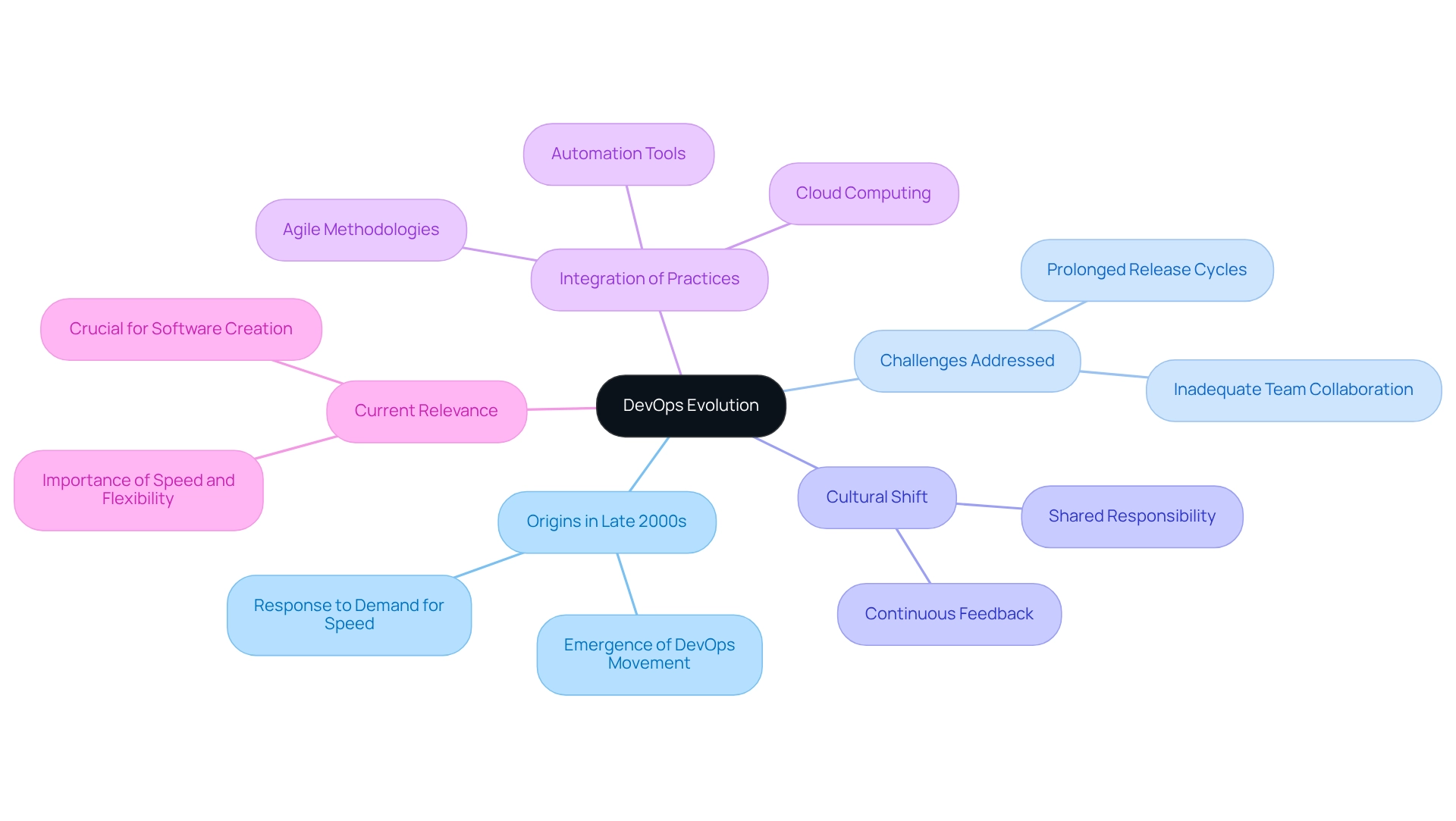
The practice originated in the late 2000s as a response to the escalating demand for faster and more effective software delivery. Traditional development methods frequently led to prolonged release cycles and inadequate collaboration among teams. The movement known as what is devops emerged to address these challenges by cultivating a culture of shared responsibility and continuous feedback. As technology has evolved, this approach has also progressed, integrating practices such as Agile methodologies, cloud computing, and automation tools to enhance its efficacy. Currently, the amalgamation of operations and software practices is recognized as a crucial component of effective software creation strategies, particularly in an era where speed and flexibility are paramount.
Explore Key Characteristics: Methodologies and Practices of DevOps
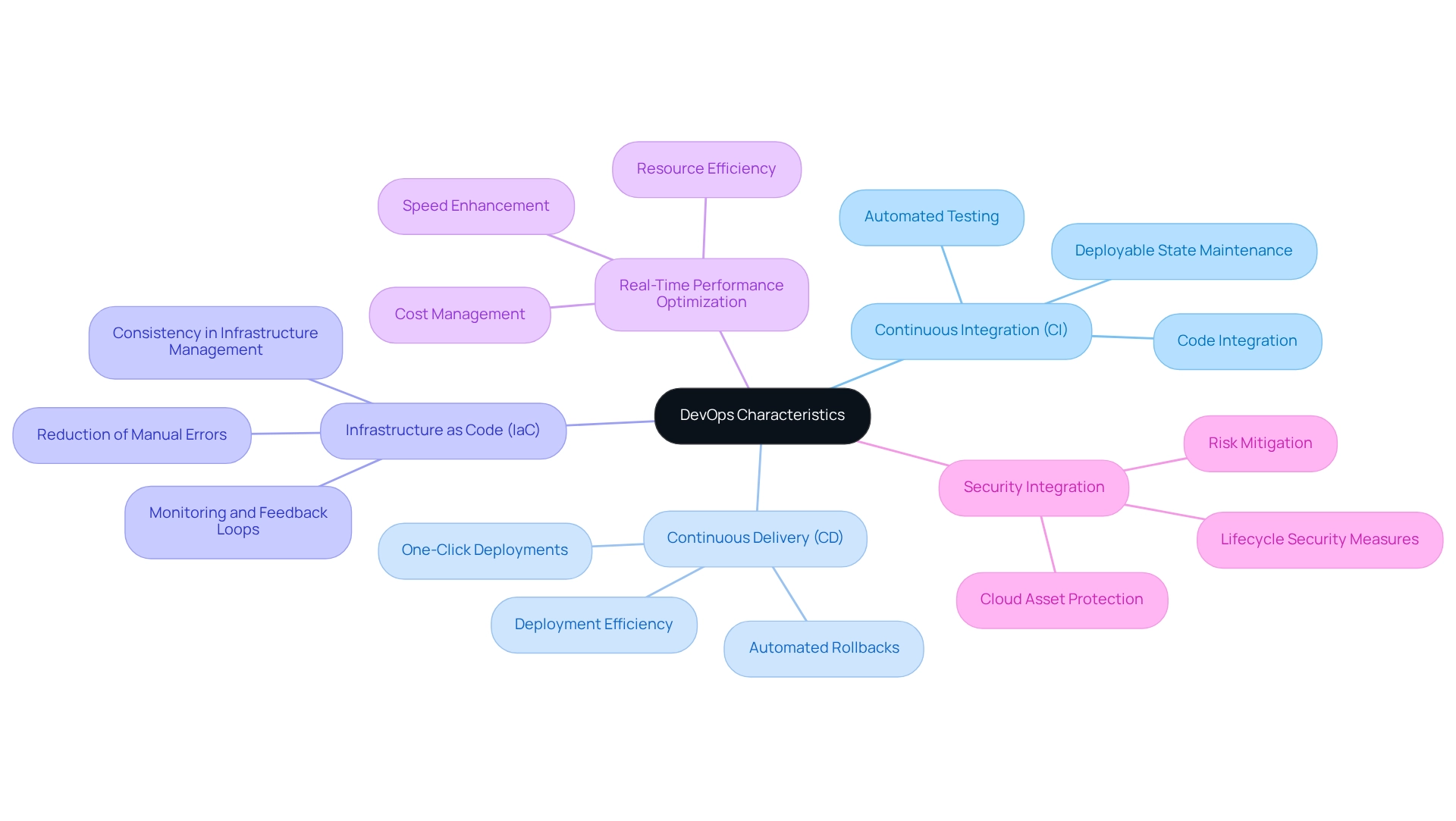
The key characteristics of what is DevOps include continuous integration (CI), continuous delivery (CD), and infrastructure as code (IaC). CI is a fundamental process that automatically tests and integrates code changes into a shared repository, ensuring that new code remains in a deployable state. This process is crucial for agile digital creation development at Studio Graphene, as it empowers developers to merge their code changes regularly, facilitating rapid iterations and enhancements. In addition, CD automates the deployment process, enabling one-click deployments and rollbacks, which streamline digital product updates and enhance deployment efficiency.
IaC allows teams to manage and provision infrastructure through code, promoting consistency while reducing manual errors. Furthermore, this approach emphasizes monitoring and feedback loops, which are essential for early issue recognition and overall system performance enhancement. Real-time performance optimization is vital for balancing cost, speed, and resources, ensuring that applications operate efficiently. Automated alerts play a significant role in this ecosystem by ensuring timely intervention and improving collaboration among stakeholders during incident management.
Moreover, practices in the field integrate security measures throughout the infrastructure creation lifecycle, thereby protecting cloud assets and mitigating risks. Collectively, these methodologies enhance teamwork, efficiency, and quality in software development, ultimately leading to superior outcomes. How can organizations leverage these DevOps principles to understand what is DevOps and drive their digital transformation?
Highlight Importance: Benefits of DevOps in Modern Tech
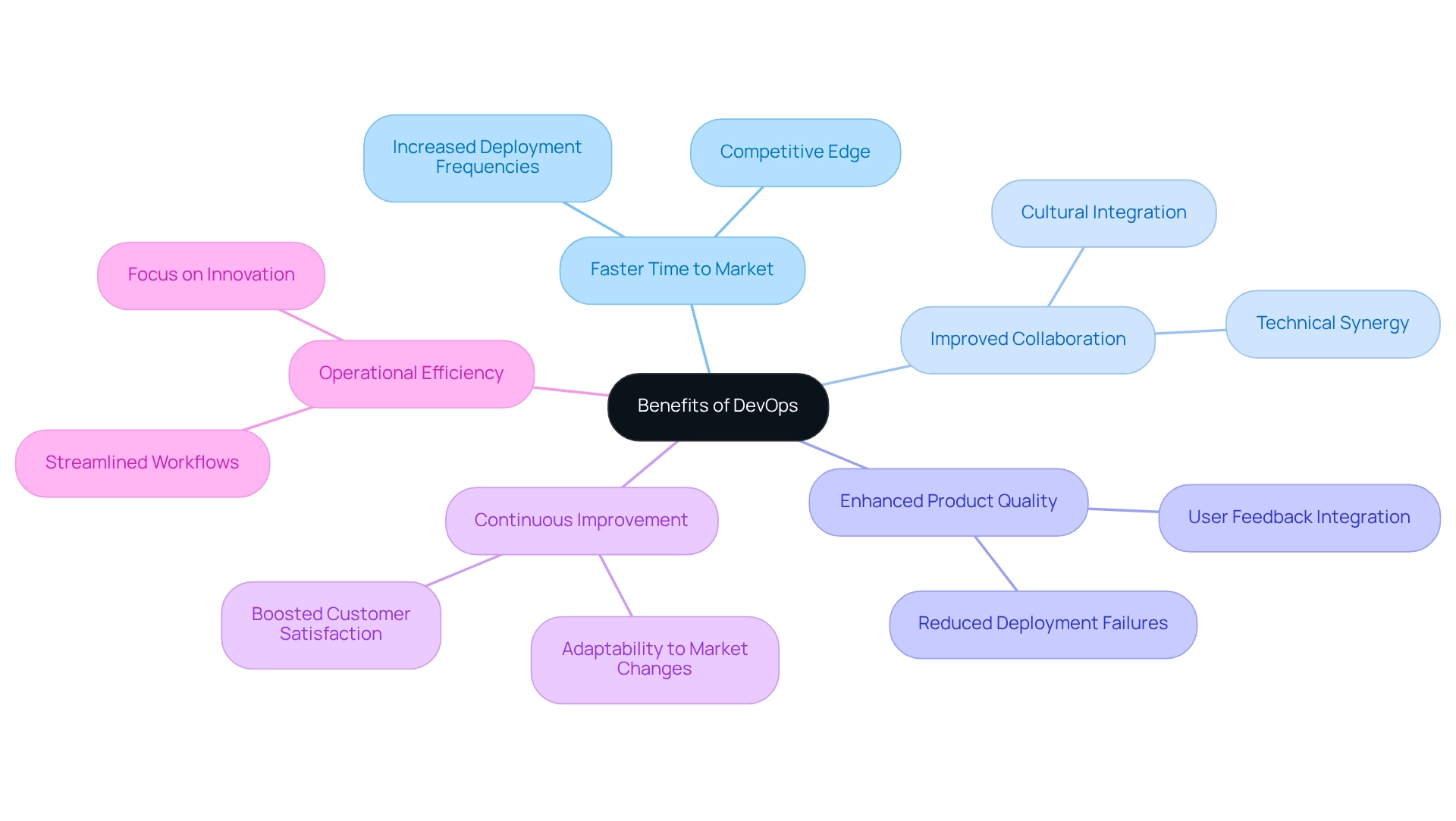
The implementation of practices that define what is DevOps presents a multitude of benefits, notably faster time to market, improved collaboration, and enhanced product quality. Organizations that understand what is DevOps and embrace the cultural and technical aspects of collaboration can achieve deployment frequencies that significantly surpass those of traditional methods, often resulting in a competitive edge.
Furthermore, this practice fosters a culture of continuous improvement, which is a key aspect of what is DevOps, enabling teams to swiftly respond to user feedback and market changes. Such adaptability not only boosts customer satisfaction but also mitigates the risk of deployment failures.
In addition, understanding what is DevOps through the integration of automation tools within its practices streamlines workflows, allowing teams to concentrate on innovation rather than repetitive tasks. Consequently, businesses can attain greater operational efficiency and drive growth in an increasingly digital landscape.
Conclusion
The implementation of DevOps signifies a pivotal transformation in the intersection of software development and IT operations, significantly enhancing collaboration and productivity across teams. By embracing essential principles such as continuous integration, continuous delivery, and automation, organizations are empowered to streamline their development lifecycles and guarantee high-quality software delivery. This approach cultivates a culture of shared responsibility and improves communication, ultimately resulting in faster and more reliable software outcomes.
As technology continues to evolve, the significance of DevOps becomes increasingly evident. Initially conceived as a remedy for the shortcomings of traditional development methodologies, DevOps has matured to integrate Agile practices, cloud computing, and contemporary automation tools. This evolution highlights its indispensable role in effective software development strategies, especially in today’s rapidly changing digital landscape, where adaptability and speed are crucial for maintaining a competitive edge.
The advantages of adopting DevOps are extensive. Organizations that harness these practices experience accelerated time to market, enhanced collaboration, and superior product quality. The capacity to deploy updates swiftly while addressing user feedback not only boosts customer satisfaction but also positions businesses to excel in a dynamic environment. By emphasizing automation and continuous improvement, companies can concentrate their efforts on innovation, fostering growth and efficiency in an increasingly digital world.
In conclusion, embracing DevOps is not merely a trend; it is a necessity for organizations striving to thrive in the contemporary technological landscape. By dismantling silos and nurturing a culture of collaboration, DevOps equips teams to confront today’s challenges and seize tomorrow’s opportunities. The journey toward a more efficient and responsive software development process commences with a commitment to these transformative practices.
{"@context": "https://schema.org", "@type": "FAQPage", "mainEntity": [{"@type": "Question", "name": "What is DevOps?", "acceptedAnswer": {"@type": "Answer", "text": "DevOps is a convergence of practices that integrate software development and IT management to enhance collaboration and efficiency in the software creation lifecycle."}}, {"@type": "Question", "name": "What are the core principles of DevOps?", "acceptedAnswer": {"@type": "Answer", "text": "The core principles of DevOps include continuous integration, continuous delivery, and automation, all aimed at shortening the creation lifecycle while maintaining high software quality."}}, {"@type": "Question", "name": "How does continuous integration work in a DevOps environment?", "acceptedAnswer": {"@type": "Answer", "text": "Continuous integration involves developers consistently merging their code changes into a central repository, followed by automated builds and tests, which accelerates the creation process and ensures seamless updates."}}, {"@type": "Question", "name": "What benefits does DevOps provide in terms of software deployment?", "acceptedAnswer": {"@type": "Answer", "text": "DevOps allows for one-click deployments and rollbacks, greatly simplifying the process of updating digital products and ensuring that updates can be deployed seamlessly."}}, {"@type": "Question", "name": "How does DevOps improve collaboration between teams?", "acceptedAnswer": {"@type": "Answer", "text": "DevOps fosters a culture of collaboration between programming and operations teams, eliminating barriers and improving communication, which leads to faster and more reliable software delivery."}}, {"@type": "Question", "name": "Why is real-time performance optimization important in DevOps?", "acceptedAnswer": {"@type": "Answer", "text": "Real-time performance optimization is essential for balancing cost, speed, and resources effectively, ensuring the success of any application."}}, {"@type": "Question", "name": "How does automation contribute to incident management in DevOps?", "acceptedAnswer": {"@type": "Answer", "text": "The implementation of automated notifications within development and operations facilitates timely interventions, enhancing collaboration among stakeholders and ensuring that incidents are addressed swiftly."}}, {"@type": "Question", "name": "In what ways does DevOps enhance security in software operations?", "acceptedAnswer": {"@type": "Answer", "text": "The adoption of robust practices in software operations enhances security at every stage of the infrastructure creation lifecycle, contributing to a more resilient production environment."}}, {"@type": "Question", "name": "What overall impact does embracing DevOps principles have on organizations?", "acceptedAnswer": {"@type": "Answer", "text": "Embracing DevOps principles streamlines processes and fortifies operational capabilities, helping organizations navigate the complexities of modern software delivery."}}]}{"@context": "https://schema.org", "@type": "BlogPosting", "headline": "What is DevOps? Understanding Its Core Concepts and Importance", "description": "Discover what DevOps is and its core concepts, enhancing software delivery and collaboration.", "datePublished": "2025-06-07T00:00:18.287000", "image": ["https://cdn.prod.website-files.com/5fc90bae06ffc6ed06fd0e3c/6844f5756e67a4bb83f58076_nwrgcloa-begin-at-the-center-with-the-main-idea-of-dev-ops-then-follow-the-branches-to-explore-each-core-principle-and-how-they-work-together-to-improve-software-development-and-it-management.webp", "https://cdn.prod.website-files.com/5fc90bae06ffc6ed06fd0e3c/6844f5756e67a4bb83f58079_cofaljlz-start-at-the-center-with-dev-ops-evolution-then-explore-the-branches-to-discover-its-history-challenges-it-solves-cultural-impacts-integrated-practices-and-why-its-crucial-today.webp", "https://cdn.prod.website-files.com/5fc90bae06ffc6ed06fd0e3c/6844f5756e67a4bb83f5807d_xdsumkpk-the-central-node-represents-dev-ops-with-branches-showing-its-core-methodologies-each-sub-branch-explains-the-benefits-and-practices-related-to-that-methodology-helping-you-understand-how-they-all-connect-and-contribute-to-effective-software-development.webp", "https://cdn.prod.website-files.com/5fc90bae06ffc6ed06fd0e3c/6844f5756e67a4bb83f58072_bixzywwb-the-central-node-represents-the-main-theme-of-dev-ops-benefits-and-each-branch-highlights-a-specific-advantage-the-sub-branches-provide-additional-details-or-examples-related-to-each-benefit.webp"], "articleBody": "## Overview\nDevOps represents a transformative methodology that seamlessly integrates software development with IT management, enhancing collaboration and efficiency. Core principles such as continuous integration, continuous delivery, and automation are pivotal in this approach. These practices not only accelerate the software creation lifecycle but also cultivate a culture of shared responsibility and continuous improvement. Consequently, organizations witness a marked increase in product quality and a reduction in time-to-market. By embracing DevOps, companies can position themselves for success in an increasingly competitive landscape.\n\n## Introduction\nIn the rapidly evolving landscape of technology, organizations are increasingly turning to DevOps as a transformative approach to software development and IT operations. This shift addresses the challenge of siloed functions, enhancing collaboration and boosting productivity. By merging these traditionally separate domains, DevOps empowers teams to deliver high-quality software at unprecedented speeds. \n\nWith core principles such as:\n\n1. Continuous integration\n2. Continuous delivery\n3. A strong emphasis on automation\n\nDevOps not only shortens development lifecycles but also fosters a culture of shared responsibility and continuous feedback. As businesses navigate the complexities of modern digital demands, understanding the evolution, methodologies, and benefits of DevOps is essential for achieving a competitive edge in today's fast-paced market.\n\n## Define DevOps: Core Concepts and Principles\nWhat is DevOps? It represents a vital convergence of practices that integrate software development and IT management, aimed at enhancing collaboration and efficiency. To understand what is DevOps, one must recognize that its core principles include:\n\n1. Continuous integration\n2. Continuous delivery\n3. Automation\n\nAll designed to shorten the creation lifecycle while upholding high software quality. Continuous integration is particularly crucial in agile digital creation at Studio Graphene, where developers consistently merge their code changes into a central repository, followed by automated builds and tests. This method not only accelerates the creation process but also ensures that updates can be deployed seamlessly through one-click deployments and rollbacks, greatly simplifying digital product updates.\n\nBy fostering a culture of collaboration between programming and operations teams, this approach exemplifies what is DevOps, as it seeks to eliminate barriers and improve communication, ultimately leading to faster and more reliable software delivery. Furthermore, real-time performance optimization is essential for any application's success, as it helps to effectively balance cost, speed, and resources. The implementation of automated notifications within development and operations facilitates timely interventions and enhances collaboration among stakeholders, ensuring that incidents are addressed swiftly.\n\nMoreover, the adoption of [robust practices in software operations](https://studiographene.com/about) enhances security at every stage of the infrastructure creation lifecycle, contributing to a more resilient production environment. As organizations navigate the complexities of modern software delivery, embracing these principles will not only streamline processes but also fortify their operational capabilities.\n\n\n## Contextualize DevOps: Evolution and Relevance in Technology\nThe practice originated in the late 2000s as a response to the escalating demand for faster and more effective software delivery. Traditional development methods frequently led to [prolonged release cycles](https://studiographene.com/our-services) and inadequate collaboration among teams. The movement known as what is devops emerged to address these challenges by cultivating a culture of shared responsibility and continuous feedback. As technology has evolved, this approach has also progressed, integrating practices such as Agile methodologies, cloud computing, and automation tools to enhance its efficacy. Currently, the amalgamation of operations and software practices is recognized as a crucial component of effective software creation strategies, particularly in an era where speed and flexibility are paramount.\n\n\n## Explore Key Characteristics: Methodologies and Practices of DevOps\nThe key characteristics of what is DevOps include continuous integration (CI), continuous delivery (CD), and infrastructure as code (IaC). CI is a fundamental process that automatically tests and integrates code changes into a shared repository, ensuring that new code remains in a deployable state. This process is crucial for [agile digital creation development](https://studiographene.com) at Studio Graphene, as it empowers developers to merge their code changes regularly, facilitating rapid iterations and enhancements. In addition, CD automates the deployment process, enabling one-click deployments and rollbacks, which streamline digital product updates and enhance deployment efficiency. \n\nIaC allows teams to manage and provision infrastructure through code, promoting consistency while reducing manual errors. Furthermore, this approach emphasizes monitoring and feedback loops, which are essential for early issue recognition and overall system performance enhancement. Real-time performance optimization is vital for balancing cost, speed, and resources, ensuring that applications operate efficiently. Automated alerts play a significant role in this ecosystem by ensuring timely intervention and improving collaboration among stakeholders during incident management. \n\nMoreover, practices in the field integrate security measures throughout the infrastructure creation lifecycle, thereby protecting cloud assets and mitigating risks. Collectively, these methodologies enhance teamwork, efficiency, and quality in software development, ultimately leading to superior outcomes. How can organizations leverage these DevOps principles to understand what is DevOps and drive their digital transformation?\n\n\n## Highlight Importance: Benefits of DevOps in Modern Tech\nThe implementation of practices that define what is DevOps presents a multitude of benefits, notably faster time to market, improved collaboration, and enhanced product quality. Organizations that [understand what is DevOps](https://studiographene.com/about) and embrace the cultural and technical aspects of collaboration can achieve deployment frequencies that significantly surpass those of traditional methods, often resulting in a competitive edge. \n\nFurthermore, this practice fosters a culture of continuous improvement, which is a key aspect of what is DevOps, enabling teams to swiftly respond to user feedback and market changes. Such adaptability not only boosts customer satisfaction but also mitigates the risk of deployment failures. \n\nIn addition, understanding what is DevOps through the integration of automation tools within its practices streamlines workflows, allowing teams to concentrate on innovation rather than repetitive tasks. Consequently, businesses can attain greater operational efficiency and drive growth in an increasingly digital landscape.\n\n\n\n## Conclusion\nThe implementation of DevOps signifies a pivotal transformation in the intersection of software development and IT operations, significantly enhancing collaboration and productivity across teams. By embracing essential principles such as continuous integration, continuous delivery, and automation, organizations are empowered to streamline their development lifecycles and guarantee high-quality software delivery. This approach cultivates a culture of shared responsibility and improves communication, ultimately resulting in faster and more reliable software outcomes. \n\nAs technology continues to evolve, the significance of DevOps becomes increasingly evident. Initially conceived as a remedy for the shortcomings of traditional development methodologies, DevOps has matured to integrate Agile practices, cloud computing, and contemporary automation tools. This evolution highlights its indispensable role in effective software development strategies, especially in today\u2019s rapidly changing digital landscape, where adaptability and speed are crucial for maintaining a competitive edge. \n\nThe advantages of adopting DevOps are extensive. Organizations that harness these practices experience accelerated time to market, enhanced collaboration, and superior product quality. The capacity to deploy updates swiftly while addressing user feedback not only boosts customer satisfaction but also positions businesses to excel in a dynamic environment. By emphasizing automation and continuous improvement, companies can concentrate their efforts on innovation, fostering growth and efficiency in an increasingly digital world. \n\nIn conclusion, embracing DevOps is not merely a trend; it is a necessity for organizations striving to thrive in the contemporary technological landscape. By dismantling silos and nurturing a culture of collaboration, DevOps equips teams to confront today\u2019s challenges and seize tomorrow\u2019s opportunities. The journey toward a more efficient and responsive software development process commences with a commitment to these transformative practices.\n\n::iframe[https://iframe.tely.ai/cta/eyJhcnRpY2xlX2lkIjogIjY4NDM4MTEyODg2ZDlkNjJiYjA5YmFmMCIsICJjb21wYW55X2lkIjogIjY3YzVkZmRhMjY3MzljNjRhMWVjYjdiYSIsICJpbmRleCI6IG51bGwsICJ0eXBlIjogImFydGljbGUifQ==]{width=\"100%\" height=\"300px\"}"}