
AI tools. Proven in the real world.

We design, build and deploy AI that works.

Since 2016, we’ve embedded AI into real digital products - for our clients and ourselves. From safeguarding children on airport baggage carousels to speeding up delivery with our own custom-built tools like Pulse, we build AI that works in context, moves at pace and delivers with purpose.

What we've learned

It’s evolving fast
No one has all the answers. We learn, test and adapt.
It’s not a silver bullet
AI only works when it solves the right problem the right way.
It takes more than tech
Hype fades - clarity, focus and process drive results.

Our approach

We keep things clear and simple when it comes to how we approach AI. Our process is all about creating AI solutions and tools that actually make a difference to your business.

01.

Discover

Clarify the opportunity. Define the use case. Align on goals.

02.

Design

Prototype, validate and assess feasibility before you invest.

03.

Build

Create usable tools fast and adapt based on real-world feedback.

Our own AI tools

We use AI too - not just for our clients, but to improve how we work. Faster, smarter, more transparently.

Smarter delivery, powered by AI

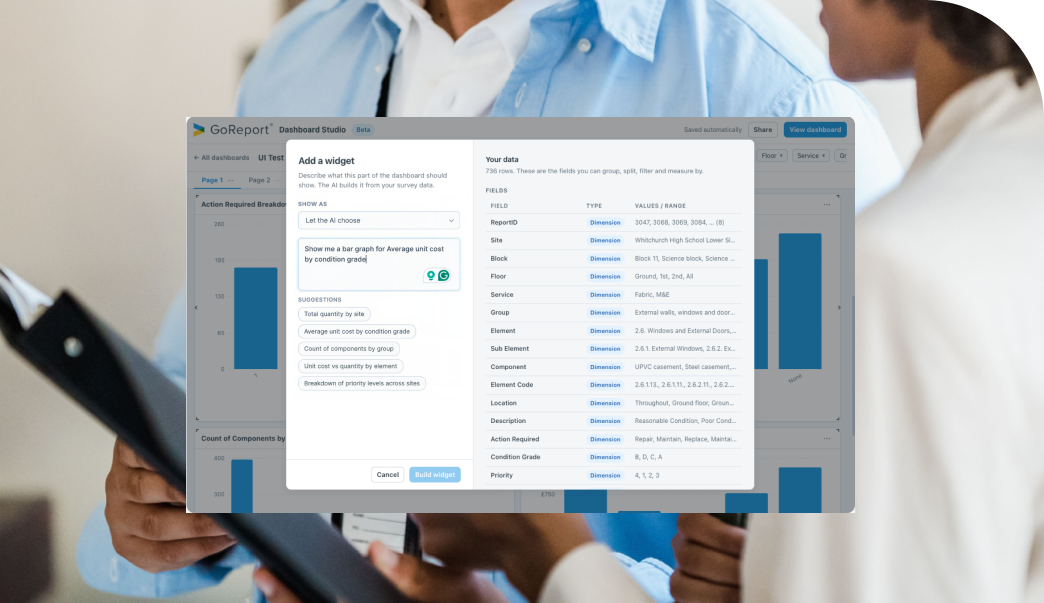
Pulse is our in-house project intelligence tool - designed to improve the speed, clarity and quality of digital product delivery. With a built-in AI layer, it gives teams real-time insight without the overhead of manual updates.


Focus on what matters
Pulse frees teams from manual status tracking, giving them more time to build.
Stay aligned
A shared, always-on view of progress, issues and opportunities.
Improve quality and speed
Actionable suggestions to help teams prioritise better and move faster.
Spot risks early
It analyses dev conversations to flag blockers, sentiment and delivery risk.
Real AI, real use, real impact
We’ll keep experimenting, learning and sharing what we discover.
Talk to us about AI

What Would Your AI-Native Competitor Do?

Illustration representing an AI-native competitor challenging traditional product strategy, showing how AI, automation and modern engineering can help organisations rethink inherited assumptions, operating models and competitive advantage.

How AI Is Changing Product Strategy and Validation

Abstract illustration showing AI influencing product strategy, with connected systems representing ideas, validation and rapid experimentation feeding into product decisions

AI Is Turning Product Design Into A Judgement-Led Discipline

Illustration showing product designers making judgement-led decisions in AI systems with variable, context-dependent outcomes rather than fixed outputs.

AI Product Design No Longer Stops At Launch

AI-generated illustration showing the shift in product design from static interfaces and predefined flows to evolving AI-native systems. The image reflects how design decisions extend beyond launch as products adapt through user interaction, feedback loops and changing system behaviour over time.

Why AI Products Need Different UX Design Principles

AI-generated illustration showing how UX design is evolving in AI products, with a balance between automation, trust, visibility and human control. The image represents the shift from traditional predictable software flows to more adaptive AI-driven experiences where clarity and recoverability are important to user confidence.

What Would Your AI-Native Competitor Do?

Illustration representing an AI-native competitor challenging traditional product strategy, showing how AI, automation and modern engineering can help organisations rethink inherited assumptions, operating models and competitive advantage.

How AI Is Changing Product Strategy and Validation

Abstract illustration showing AI influencing product strategy, with connected systems representing ideas, validation and rapid experimentation feeding into product decisions

AI Is Turning Product Design Into A Judgement-Led Discipline

Illustration showing product designers making judgement-led decisions in AI systems with variable, context-dependent outcomes rather than fixed outputs.

AI Product Design No Longer Stops At Launch

AI-generated illustration showing the shift in product design from static interfaces and predefined flows to evolving AI-native systems. The image reflects how design decisions extend beyond launch as products adapt through user interaction, feedback loops and changing system behaviour over time.

Why AI Products Need Different UX Design Principles

AI-generated illustration showing how UX design is evolving in AI products, with a balance between automation, trust, visibility and human control. The image represents the shift from traditional predictable software flows to more adaptive AI-driven experiences where clarity and recoverability are important to user confidence.
Illustration representing an AI-native competitor challenging traditional product strategy, showing how AI, automation and modern engineering can help organisations rethink inherited assumptions, operating models and competitive advantage.
AI

What Would Your AI-Native Competitor Do?

Abstract illustration showing AI influencing product strategy, with connected systems representing ideas, validation and rapid experimentation feeding into product decisions
AI

How AI Is Changing Product Strategy and Validation

Illustration showing product designers making judgement-led decisions in AI systems with variable, context-dependent outcomes rather than fixed outputs.
AI

AI Is Turning Product Design Into A Judgement-Led Discipline

AI-generated illustration showing the shift in product design from static interfaces and predefined flows to evolving AI-native systems. The image reflects how design decisions extend beyond launch as products adapt through user interaction, feedback loops and changing system behaviour over time.
AI

AI Product Design No Longer Stops At Launch

AI-generated illustration showing how UX design is evolving in AI products, with a balance between automation, trust, visibility and human control. The image represents the shift from traditional predictable software flows to more adaptive AI-driven experiences where clarity and recoverability are important to user confidence.
AI

Why AI Products Need Different UX Design Principles

What Would Your AI-Native Competitor Do?

Illustration representing an AI-native competitor challenging traditional product strategy, showing how AI, automation and modern engineering can help organisations rethink inherited assumptions, operating models and competitive advantage.
AI

What Would Your AI-Native Competitor Do?

How AI Is Changing Product Strategy and Validation

Abstract illustration showing AI influencing product strategy, with connected systems representing ideas, validation and rapid experimentation feeding into product decisions
AI

How AI Is Changing Product Strategy and Validation

AI Is Turning Product Design Into A Judgement-Led Discipline

Illustration showing product designers making judgement-led decisions in AI systems with variable, context-dependent outcomes rather than fixed outputs.
AI

AI Is Turning Product Design Into A Judgement-Led Discipline

AI Product Design No Longer Stops At Launch

AI-generated illustration showing the shift in product design from static interfaces and predefined flows to evolving AI-native systems. The image reflects how design decisions extend beyond launch as products adapt through user interaction, feedback loops and changing system behaviour over time.
AI

AI Product Design No Longer Stops At Launch

Why AI Products Need Different UX Design Principles

AI-generated illustration showing how UX design is evolving in AI products, with a balance between automation, trust, visibility and human control. The image represents the shift from traditional predictable software flows to more adaptive AI-driven experiences where clarity and recoverability are important to user confidence.
AI

Why AI Products Need Different UX Design Principles

Studio Graphene contact us link